
Platform
Augmented reality work instructions that show where to act
Augmented reality work instructions show each step on the machine itself, on tablet or AR glasses. Fewer errors, faster onboarding, proof per step.
In short
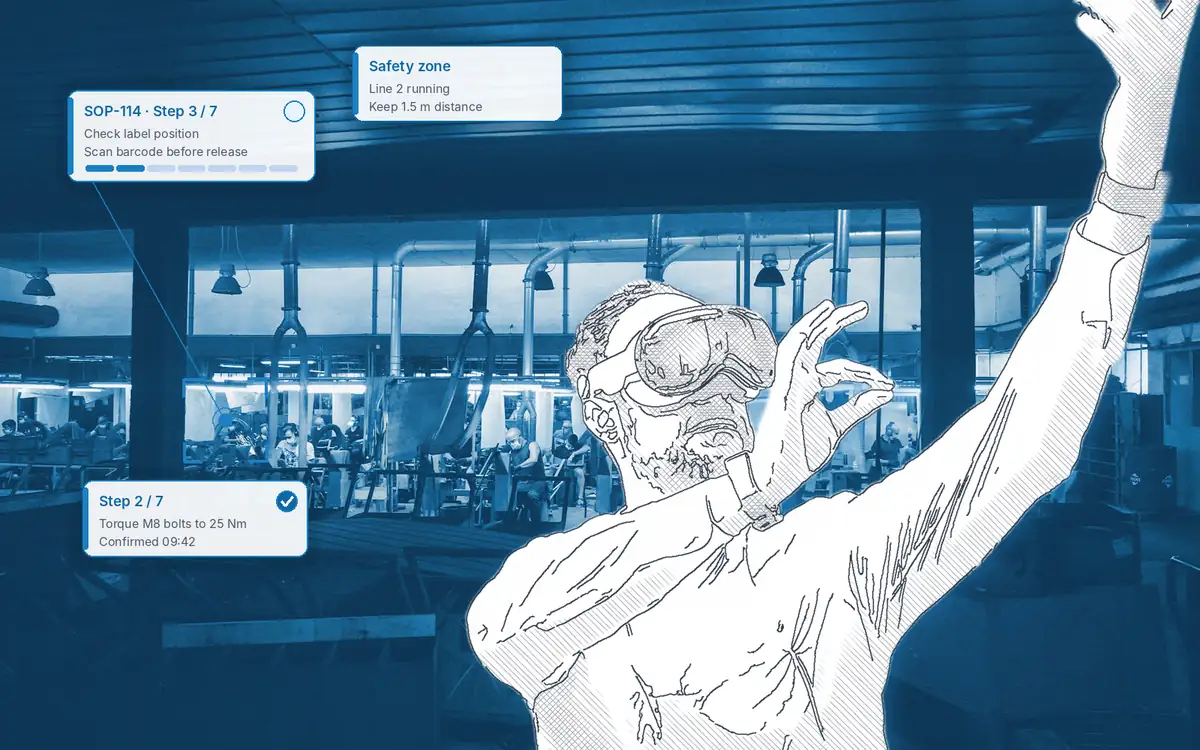
Augmented reality work instructions place digital guidance on top of the real workplace. Instead of reading a manual, the operator sees which valve, bolt or connector comes next, right on the equipment. Actarion delivers AR work instructions on tablets and AR glasses, and records each confirmed step for the audit trail.
How it works on the shop floor
How do augmented reality work instructions work?
- 1
Anchor the instruction.
The author links steps to the real equipment, for example with a marker or a 3D reference.
- 2
Open the task.
The operator selects the task on the tablet or glasses, or scans a code on the machine.
- 3
Follow the overlay.
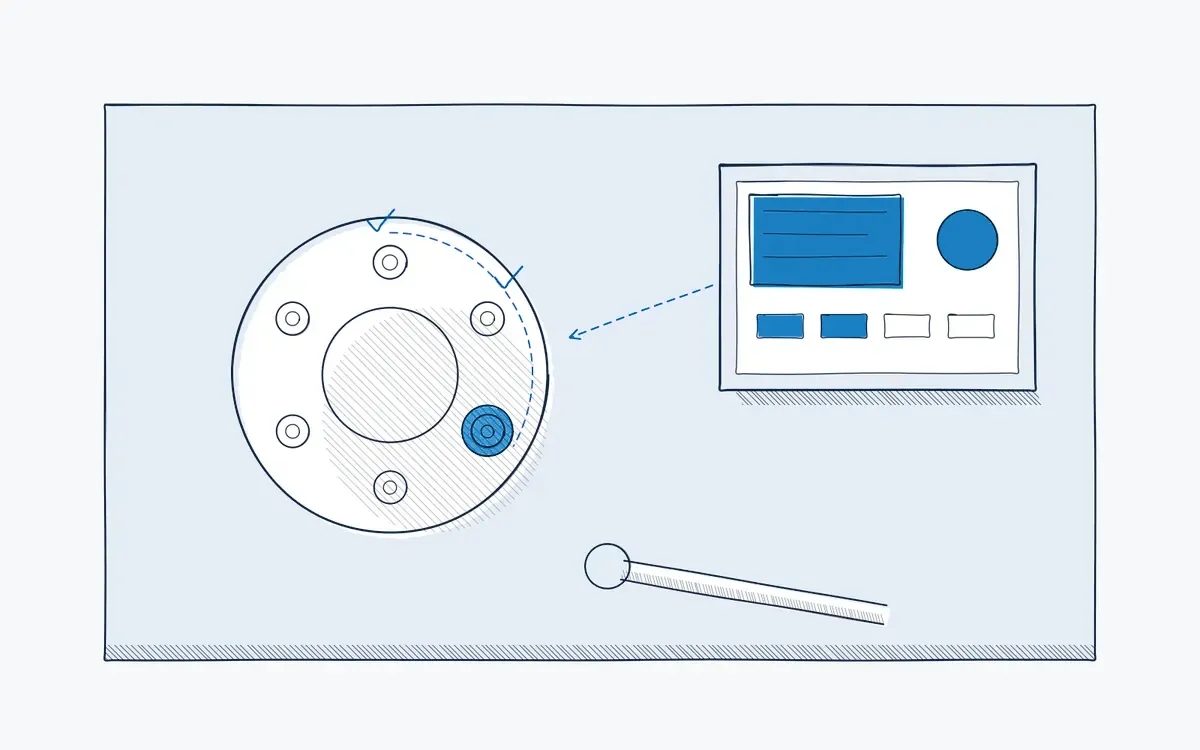
Arrows, highlights and step cards show what to do and where.
- 4
Confirm each step.
By tap, voice or gesture, depending on the device. Photos can be added as evidence.
- 5
Escalate if needed.
If something is off, the operator starts a remote support call.
Where do operators go wrong today?
- They pick the wrong part, valve or connector because the drawing does not match what they see.
- They skip a step under time pressure, and nobody notices until rework or a stoppage.
- Rare tasks, such as an annual maintenance job, are done from memory.
- New hires need an experienced colleague beside them for every task.
What is AR guidance?
AR guidance, short for augmented reality guidance, overlays instructions on the physical world through a camera or transparent display. On a tablet, the operator points the camera at the machine and sees markers on the screen. On AR glasses, the markers appear in the field of view, and both hands stay free.
Each step combines a short instruction, a visual cue on the equipment and a confirmation. That is the difference with a PDF: the operator cannot lose their place.
Tablet or AR glasses?
| Criterion | Tablet | AR glasses |
|---|---|---|
| Hands-free | No | Yes |
| Start-up effort | Low; most sites already use tablets | Higher; fit, comfort and device management |
| Best for | Assembly, inspections, onboarding at a workstation | Maintenance, complex assembly, work at height |
| Supported devices | iOS and Android tablets | Apple Vision Pro, HoloLens 2, Android XR |
Read the full comparison: AR glasses vs tablets.
What does it bring each role?
| Role | Benefit |
|---|---|
| Operator | Sees the next step on the equipment; less searching and doubt |
| Team leader | New staff work independently sooner |
| Quality / HSE | Critical steps cannot be skipped; each step is confirmed |
| HR / L&D | Training happens at the real workstation, not in a classroom |
Technical points
- Content types: text, image, video, 3D models and AR markers per step.
- Voice and gesture: hands-free confirmation on supported glasses.
- Offline use: the platform is cloud-based; working without a connection is tested per device in the pilot.
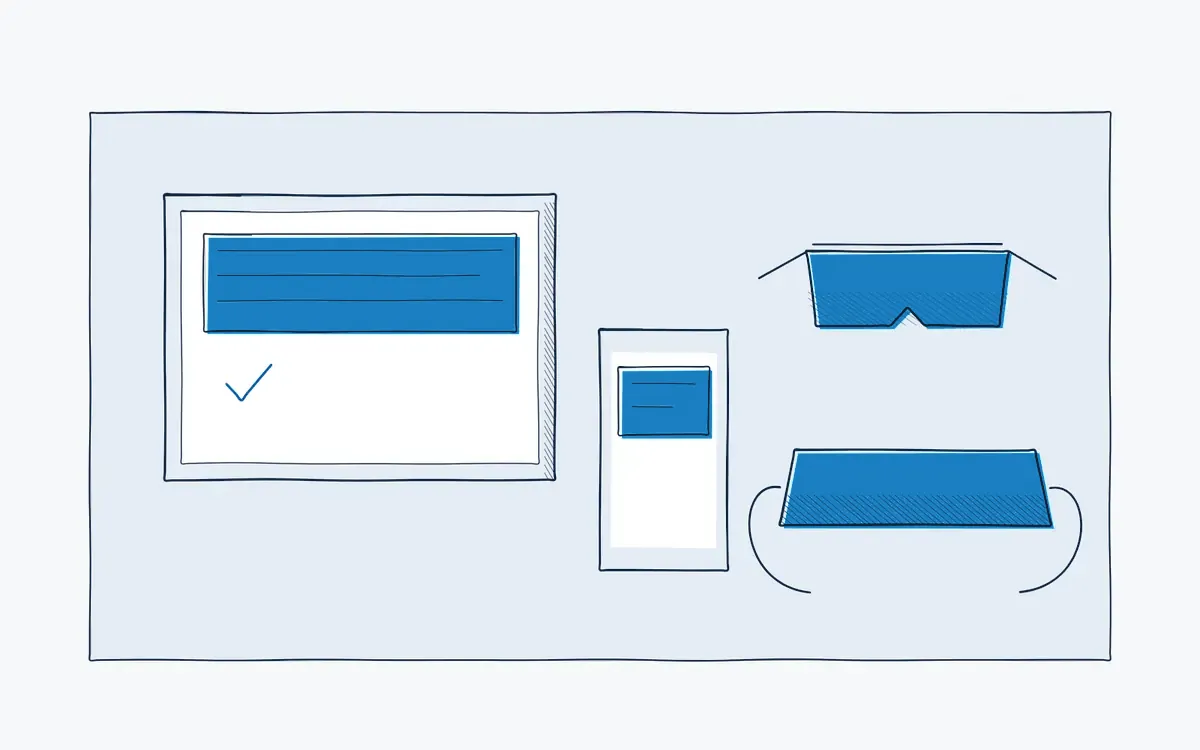
- Same content, every device: one instruction runs on tablet and glasses.
How Actarion helps
- We pick tasks where AR adds the most: rare, complex or safety-critical steps.
- We build the first AR work instructions with your experts.
- We advise on the right device per task and set it up for the pilot.
- We measure errors and execution time before and after.
See AR guidance on your own process
- Scope
- 1–2 lines, 1 process
- Duration
- 6–8 weeks
- KPIs
- lead time · first time right · errors
- Prerequisite
- baseline across several shifts
Frequently asked questions
No. A tablet camera works well for most tasks. Glasses add value when both hands are busy.
Industrial tablets and some glasses are built for that. Voice control may be limited in very loud areas, so tap or gesture is the fallback.
No. Instructions are edited in a no-code studio and updates sync to all devices.
Pricing is tailored to your industry and sector, users and use cases. Book a free intake call for a proposal.


See your own process as a digital work instruction.
In 30 minutes we look at your process, your numbers and the fastest route to a measurable pilot. No sales pitch, just concrete advice.