
Use case · changeovers and batch preparation
Every format change right first time.
Operators follow the same visual steps at every changeover, with checks that cannot be skipped and photos as proof. On the night shift too, and for anyone doing the changeover for the first time.

Sound familiar?
Every shift changes over differently
Changeover time depends on who is on shift.
Errors only show in the first batch
A wrong setting means scrap, rework and another start-up.
Know-how sits in a few heads
When the experienced colleague is away, it takes longer or goes wrong.
How it works on the shop floor
From experience to standard, in three steps.
- 1
Capture
Your best operator performs the changeover; we capture every step with photos, short videos and settings.
- 2
Guide
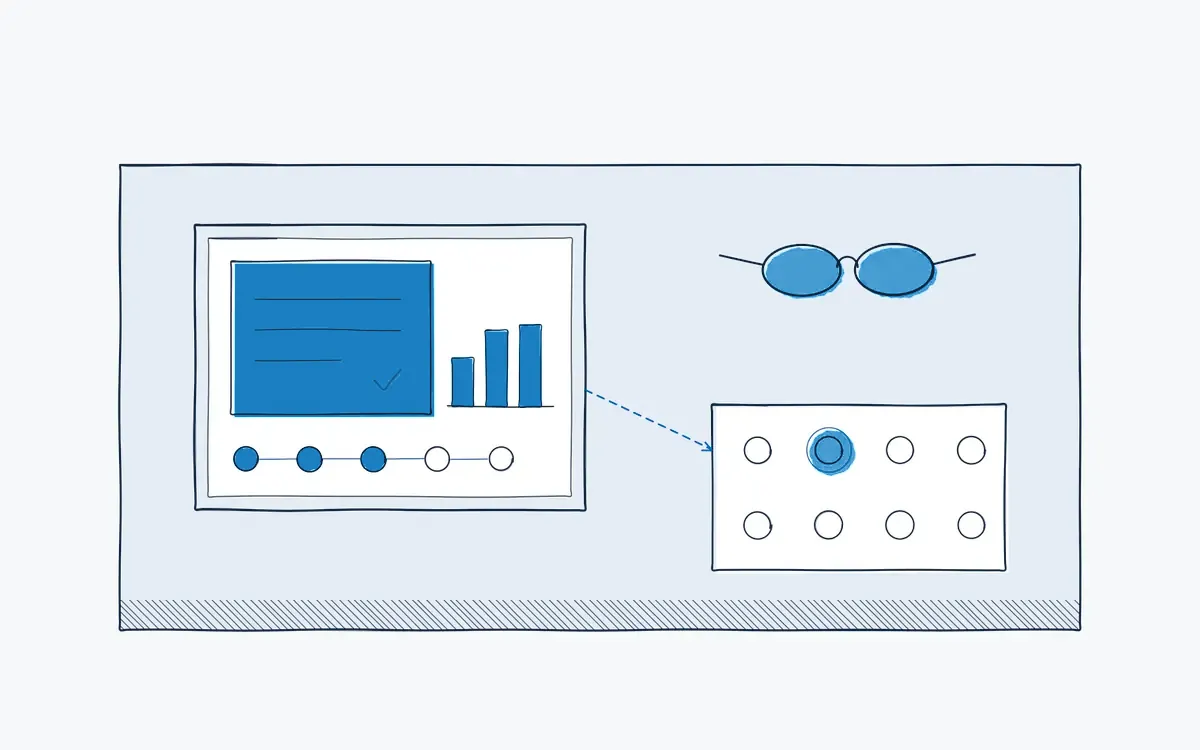
On a tablet or smart glasses the operator sees step by step what to do, with mandatory checks.
- 3
Improve
Every run produces time and error data, so you can see which step slows the changeover down.
- Scope
- 1–2 lines, 1 changeover type
- Duration
- 6–8 weeks
- KPIs
- changeover time · first time right · first-batch scrap
- Prerequisite
- baseline of several changeovers, across shifts
Frequently asked questions
SMED is a method developed by Shigeo Shingo to cut changeover time, ideally to under ten minutes. It separates internal from external tasks and then shortens both.
It helps, but it is not required. Digitizing the current best practice already reduces variation. The step times then show where to improve.
It can. We advise using the data at team level to improve the method, not to judge individuals.
Other use cases



See your own changeover as a digital work instruction.
In 30 minutes we look at your process, your numbers and the fastest route to a measurable pilot. No sales pitch, just concrete advice.