What Is Poka-Yoke? Error-Proofing Explained
Poka-yoke is error-proofing: designing a process so mistakes are impossible or caught at once. See examples from the shop floor and digital poka-yoke.

Definition
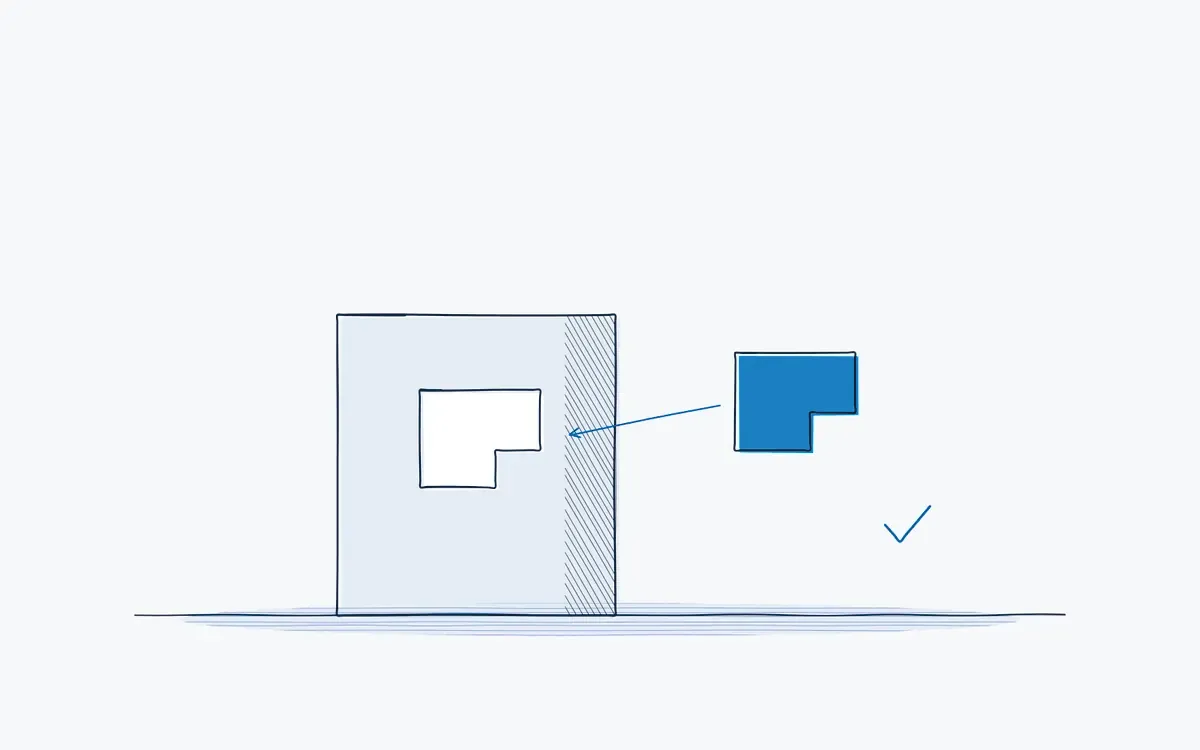
Poka-yoke is the lean principle of error-proofing: designing a part, tool or process so that a mistake cannot happen or is detected immediately. Examples are keyed connectors and sensors that stop a press. Actarion adds digital poka-yoke: mandatory checks and confirmations inside the work instruction.
Why does it matter on the shop floor?
- The same mistake comes back after every retraining.
- Errors are found at end-of-line inspection, not at the source.
What is poka-yoke?
Poka-yoke is a Japanese term for 'mistake-proofing'. It is any mechanism that prevents an error or makes it visible at the moment it occurs.
Physical poka-yoke uses shape, fixtures or sensors. Procedural poka-yoke uses forced sequences and checks. Both remove reliance on memory and attention.
Key elements
- 1Prevention: the error cannot occur.
- 2Detection: the error is flagged at once.
- 3Reaction: the process stops or asks for correction.
Example from the shop floor
A plug fits only one way into its socket, so it cannot be connected wrongly. In a digital instruction, the next step stays locked until a torque value is entered.
How does Actarion help?
- Actarion builds checks, required inputs and photo confirmation into each critical step.
- Digital, step-by-step work instructions generated from your SOPs with AI.
- AR guidance on tablets and AR glasses, with an audit trail per execution.
Frequently asked questions
The concept is associated with Shigeo Shingo and the Toyota Production System.
Yes. Forced sequences and input checks in digital instructions act as procedural poka-yoke.
It reduces the need for it, but critical checks usually remain.