Operator Onboarding: From First Day to Qualified, Faster
Contents

Short answer
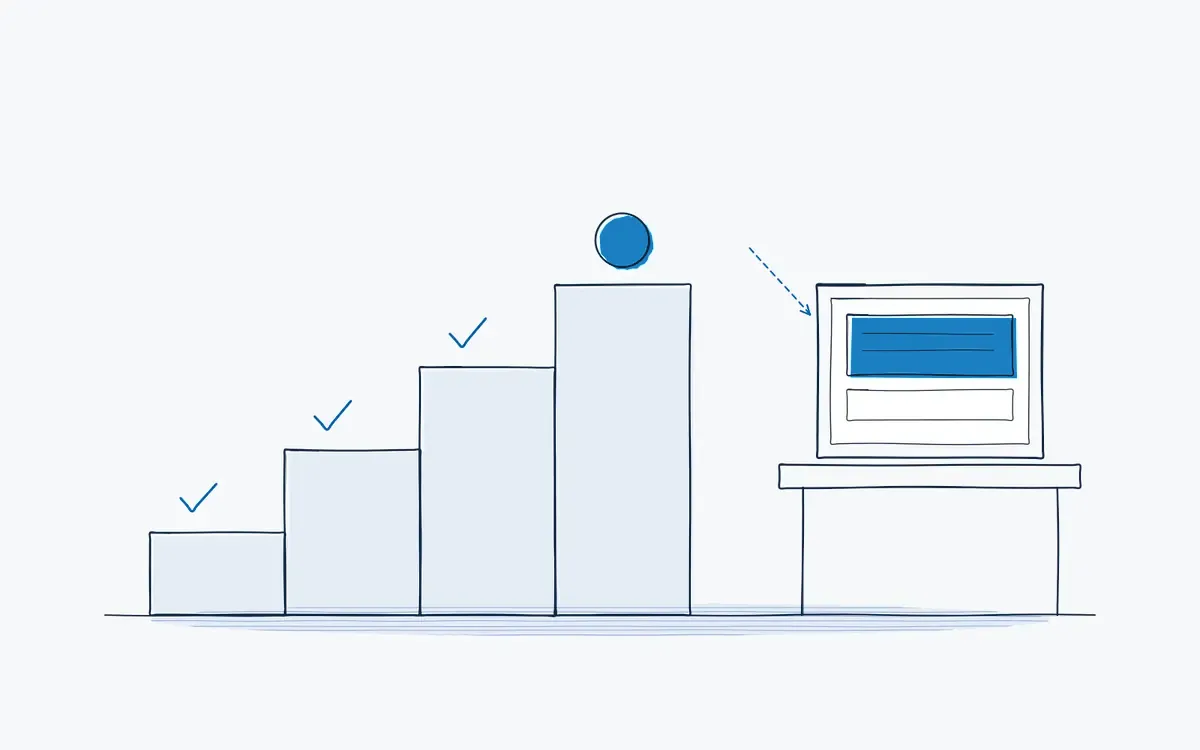
Operator onboarding is the structured process that takes a new production employee from first day to working independently and safely. A good onboarding plan defines tasks, levels, a buddy and checkpoints. Actarion shortens onboarding with digital work instructions and AR guidance, so new operators learn on the job while every step is recorded.
Why is onboarding operators so hard?
- Your best operator spends half the shift training instead of producing.
- Every trainer teaches a slightly different method.
- Temps and new hires leave before they are fully productive.
- After two weeks, nobody can say exactly what the new operator can and cannot do yet.
What makes good operator onboarding?
Good onboarding is planned, task-based and measurable. It answers three questions on any given day: what can this person do independently, what are they learning, and who is checking? The key metric is time to competence: the time from start to qualified on the required tasks.
| Element | Purpose |
|---|---|
| Onboarding plan | Fixed sequence of tasks and checkpoints |
| Buddy or trainer | One named person for questions and sign-off |
| Standard work instructions | Everyone learns the same method |
| Skills matrix | Shows progress per task |
| Checkpoints | Day 1, week 1, day 30, 60, 90 |
How do you onboard a new operator in 6 steps?
- 1Prepare before day one. Access, PPE, locker, buddy assigned, onboarding plan printed or loaded.
- 2Day one: safety and orientation. Site rules, emergency routes, lockout, the line and the people.
- 3Learn tasks in order of risk and frequency. Start with simple, frequent tasks; critical tasks come later.
- 4Learn by doing, with guidance. The new operator executes the work instruction; the buddy watches and coaches.
- 5Sign off per task. When the operator performs a task correctly several times, the trainer updates the skills matrix.
- 6Review at 30, 60 and 90 days. Check progress against the plan and adjust.
Use the operator onboarding plan template to set this up.
Example: a 30-60-90 day plan
New operator on a bottling line:
| Period | Focus | Qualified on |
|---|---|---|
| Week 1 | Safety, line orientation, hygiene | Line start-up checks (supervised) |
| Day 30 | Standard operation | Running the line, labeler reel change |
| Day 60 | Changeovers and quality checks | Format changeover, in-process checks |
| Day 90 | Fault handling and cleaning | Minor stops, CIP cleaning |
Common mistakes
- Shadowing without structure. "Just follow Peter" produces Peter's habits, good and bad.
- Too much classroom, too little line.
- No sign-off criteria. Then "qualified" is a feeling.
- Forgetting temps. They often run the same tasks but get the least training.
How do you measure success?
Measure before you change anything. Record a baseline for two to four weeks, then compare after the rollout using the same definitions. These KPIs are the most useful:
| KPI | What it tells you | How you measure it |
|---|---|---|
| Time to competence | How fast a new hire works alone | Days from start to sign-off per task |
| Trainer hours | Load on experienced colleagues | Hours of side-by-side training per new hire |
| Early errors | Whether guidance protects quality | Deviations by people in their first 90 days |
| Early attrition | Whether onboarding keeps people | Share of new hires leaving within 90 days |
Keep the list short: three KPIs that the team leader reviews every week beat ten that nobody looks at. Agree on the definitions with quality and finance up front, so the results hold up in a business case.
How Actarion helps
- Guided learning on the job: new operators follow AR instructions step by step on tablet or AR glasses.
- Less trainer time: the instruction carries the method; the buddy coaches and signs off.
- Progress in the skills matrix: completed runs and sign-offs update the matrix, via technology partner DeepSight.
- Multilingual instructions for diverse teams.
- Pilot with time to competence as KPI.
See frontline training and the onboarding and training use case.
Get started
Download the free operator onboarding plan template.
Frequently asked questions
It depends on the complexity of the tasks. Simple lines may take weeks; complex or regulated processes take months.
The time from an employee's start until they are qualified to perform the required tasks independently.
An experienced operator who is trained to train, using the standard work instructions, not their own method.
With the same instructions and sign-off criteria, but focused on the few tasks they will actually do.