
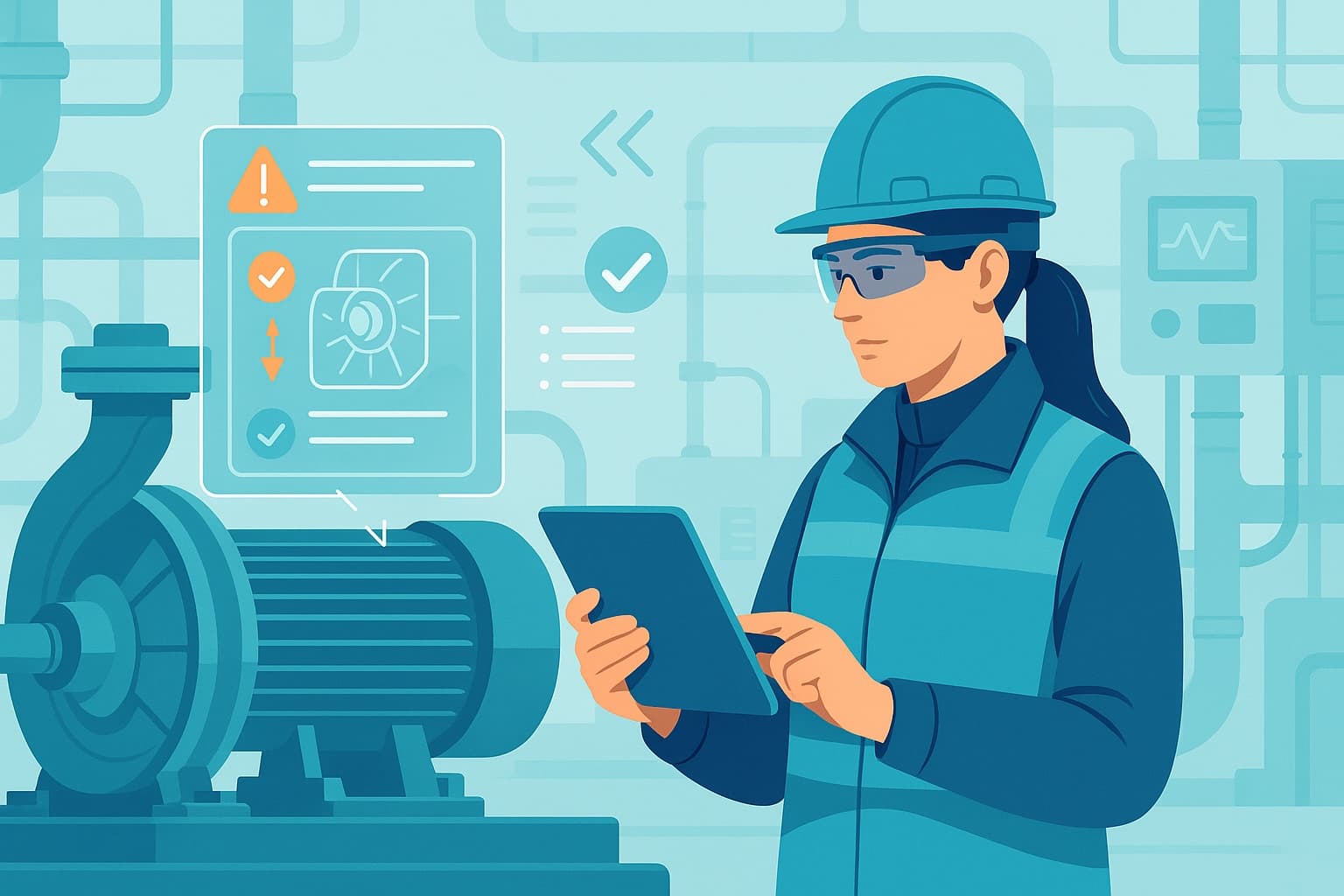
Unplanned downtime is one of the most expensive problems in industrial operations. When critical equipment fails, every minute without production is lost revenue, delayed shipments and frustrated customers. The clock starts ticking the moment a fault occurs—and stops only when the asset is back online.
AR-guided remote troubleshooting is proving to be one of the most effective tools for reducing unplanned downtime. By connecting on-site technicians with remote experts instantly, it accelerates fault diagnosis and repair guidance, cutting Mean Time To Repair dramatically.
The cost of downtime
The impact of unplanned downtime varies by industry and asset, but it is always significant:
- Lost production: Every hour of downtime is an hour of output lost
- Overtime and expediting: Rush repairs and expedited parts cost more
- Customer impact: Delayed deliveries damage relationships and reputation
- Safety and compliance: Extended outages may create safety risks or compliance gaps
Industry studies estimate that unplanned downtime costs manufacturers $50 billion or more annually. For individual plants, the cost can reach thousands of dollars per minute for critical assets.
Why traditional troubleshooting is slow
Traditional troubleshooting processes contribute to extended downtime:
Waiting for experts
When on-site technicians encounter issues beyond their skills, they call for help. Experts may be busy, unavailable or in a different time zone. Waiting time adds directly to downtime.
Miscommunication
Phone calls and static photos lose critical context. Technicians describe what they see; experts try to understand. Misunderstandings lead to incorrect diagnoses and failed repair attempts.
Multiple repair attempts
Without clear guidance, technicians may try several approaches before finding the right one. Each failed attempt extends downtime.
Delayed escalation
If remote guidance is not possible, an expert must travel to the site. Travel time—hours to days—extends downtime further.
How AR-guided remote troubleshooting reduces downtime
AR-guided remote troubleshooting addresses each of these delays:
Instant expert access
Technicians start an AR session with one tap. Experts join within minutes, not hours. The clock is running, but help arrives fast.
Visual clarity
Experts see exactly what the technician sees in real time. There is no miscommunication—the expert can point, highlight and annotate directly in the technician's view.
Guided diagnosis
Experts walk technicians through diagnostic steps visually. They can direct attention to specific components, indicators or test points. Diagnosis is faster and more accurate.
First Time Right repairs
With clear, visual guidance, technicians execute repairs correctly the first time. No trial-and-error, no failed attempts.
Faster escalation decisions
If remote guidance cannot resolve the issue, the expert has already seen the situation. They can prepare for an informed site visit or escalation, reducing wasted time.
Real-world impact: downtime reduction results
Organisations using AR-guided remote troubleshooting report significant downtime reductions:
- 40–60% reduction in Mean Time To Repair for remotely resolved issues
- 50%+ reduction in expert site visits (issues resolved remotely instead)
- 30–50% fewer repeat calls for the same issue
- Higher First Time Right rate on complex repairs
These improvements translate directly into reduced downtime, lower costs and improved asset availability.
Real-world example: utilities field service
A utilities company tracked downtime and repair metrics before and after implementing AR-guided remote troubleshooting for substation equipment:
Before:
- Average time from fault to resolution: 6.5 hours
- Expert site visits required: 35% of cases
- Repeat calls within 48 hours: 18%
After:
- Average time from fault to resolution: 2.8 hours
- Expert site visits required: 15% of cases
- Repeat calls within 48 hours: 7%
The company reduced downtime by over 55% for issues supported via AR, with significant cost savings from avoided site visits.
Keys to reducing downtime with AR remote troubleshooting
To maximise downtime reduction:
- Make AR support easy to access: Technicians should be able to start a session with minimal effort
- Ensure expert availability: Organise your expert pool for fast response
- Capture and reuse knowledge: Convert resolved issues into AR work instructions for future self-service
- Track and improve: Monitor downtime metrics and continuously refine processes
Getting started
If unplanned downtime is a significant cost driver for your operation, AR-guided remote troubleshooting can help. Start by identifying the assets and issue types where downtime is most costly, pilot AR remote support and measure results.
Learn more about AR remote expert support for corrective maintenance or contact ActARion to discuss your downtime reduction goals.
Go deeper
This article is part of our knowledge base on connected worker solutions. For a comprehensive overview, read our whitepaper:
Connected worker platforms: enabling knowledge transfer and operational support — Covers remote expert support and other key use cases enabled by connected worker platforms.