
Answers to the most common questions
Why industrial, logistics and energy companies choose AI and AR–guided work instructions, AR SOPs and digital work instructions, plus the use cases, rollout steps and ways to get started with ActARion.
Overview
What does ActARion do?▼
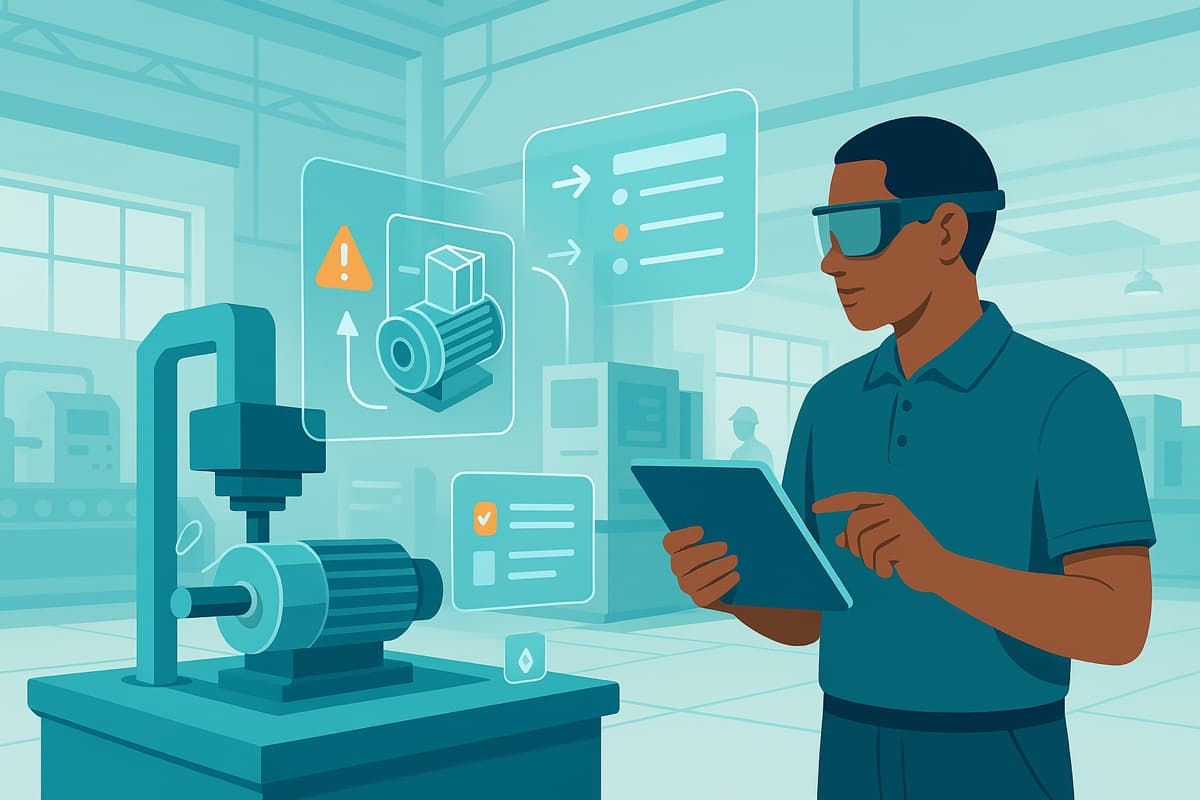
ActARion helps industrial, logistics and energy companies work smarter, safer and faster with AI and AR–guided work instructions. We transform SOPs and manuals into digital work instructions and AR SOPs that operators can follow step-by-step on tablets and smart glasses.
As the European partner of DeepSight, we bring an AR-first connected worker platform to the shop floor. Experts create step-by-step instructions, training scenarios and troubleshooting guides in a no-code editor and publish them to mobile devices and smart glasses.
Technicians and field teams get clear, visual support at the moment they need it.
How does ActARion work with DeepSight?▼
ActARion is the European partner of DeepSight, the AR-first connected worker platform. We help you implement DeepSight in your plants, design and maintain AR SOPs, and support your teams in adopting AI and AR–guided work instructions in daily operations.
DeepSight provides the platform technology. ActARion provides local implementation support, content creation guidance and change management to ensure your digital work instructions create lasting impact.
Why are organisations choosing AI and AR–guided work instructions?▼
AI also helps turn expert knowledge into multilingual digital work instructions much faster, so you can standardise best practices without long documentation projects.
Many organisations are dealing with:
- Growing complexity of machines and processes
- Shortage of experienced people
- Rising safety and compliance requirements
- High cost of mistakes and unplanned downtime
AI and AR–guided work instructions help because they:
- Bring AR SOPs into the real environment instead of binders or PDFs
- Use visuals, 3D and short clips instead of long text
- Guide people step by step, hands-free if needed
- Capture data during each task (time, photos, answers, checks) for improvement
How are AR SOPs different from traditional work instructions or an LMS?▼
You move from "people trying to remember the manual" to "the right AI and AR–guided instruction appears exactly when they need it".
Traditional manuals and LMS modules:
- Are often static and hard to keep up to date
- Live outside the workplace (SharePoint, PDFs, classroom)
- Are not linked to actual execution on the line or in the field
With ActARion and DeepSight:
- AR SOPs and digital work instructions are shown in context, on the machine or at the work location
- Content is created in a web-based no-code authoring tool and updated in minutes
- Data from each execution becomes available for training, audits and improvement
Use Cases & Tools
Which use cases can AI and AR–guided work instructions help us with?▼
Typical use cases for AR SOPs and digital work instructions include:
All content is stored in a central digital library, so you keep one version of the truth instead of scattered PDFs, PowerPoints and videos.
- Onboarding and cross-training: guiding new colleagues through safety checks, basic operations and first-line maintenance with AR SOPs.
- Complex or infrequent procedures: changeovers, calibrations, deep cleaning, shutdown/start-up and rare repairs with digital work instructions.
- Remote expert support: connecting local teams with experts via AR assistance to solve issues faster.
- Troubleshooting and diagnostics: step-by-step fault trees, visual checks and data capture for root-cause analysis.
- Quality checks and inspections: guided checklists, photo evidence and automatic logging.
- Safety and compliance procedures: lock-out/tag-out, permit-to-work, PPE checks and other mandatory steps.
Do we need smart glasses to start?▼
No. Many organisations start on smartphones or tablets. DeepSight is cross-platform and content can be used on mobile phones, tablets and smart glasses such as HoloLens 2 or Apple Vision Pro.
Smart glasses are useful when people need both hands free or work in tight or hazardous environments, but they are not a prerequisite.
How does AI help in practice?▼
AI in the DeepSight platform is used to:
This reduces the time experts spend on documentation, while keeping full control over the final content.
- Speed up the creation of new work instructions from existing documents, photos or videos
- Generate multilingual versions of procedures
- Suggest structure and steps based on similar procedures
Training & Rollout
How do we keep control over quality and training?▼
Each person has a profile that shows:
Managers can see where extra training is needed, which procedures cause issues, and where best practices from one site could help another.
- Which instructions they have followed
- Which training modules they completed
- Which certifications or authorisations they hold
How quickly can we get value from this?▼
Most customers start with a focused pilot on one or two use cases such as onboarding on a critical line, a complex changeover or a recurring quality issue.
Because the authoring tool is no-code and web-based, teams can create and adjust content quickly. ActARion supports the first months to help embed the new way of working.
- Onboarding on a critical line
- A complex changeover
- A recurring quality issue
How does ActARion support implementation?▼
We typically work in three steps:
Throughout the process we help organisations build their own capability to create and maintain content.
- Discovery – map current training and work processes, main pain points and quick wins.
- Pilot – select a few high-impact use cases, implement DeepSight, create AI and AR–guided work instructions and measure impact on errors, training time and downtime.
- Scale-up – expand to more lines, sites or processes and integrate with existing systems while building internal capability.
Next Steps
How can we explore whether AI and AR–guided work instructions make sense for our organisation?▼
The simplest next step is a short discovery call or workshop where we walk through current training and work instructions, identify 2–3 high-impact use cases and show how similar organisations use AI and AR–guided work instructions and AR SOPs today.
From there we jointly decide whether to move into a pilot or map additional requirements. ActARion supports you throughout with implementation guidance for digital work instructions.
Curious what AI and AR–guided work instructions could look like in your operations?
Schedule a demo or discovery call with ActARion.