
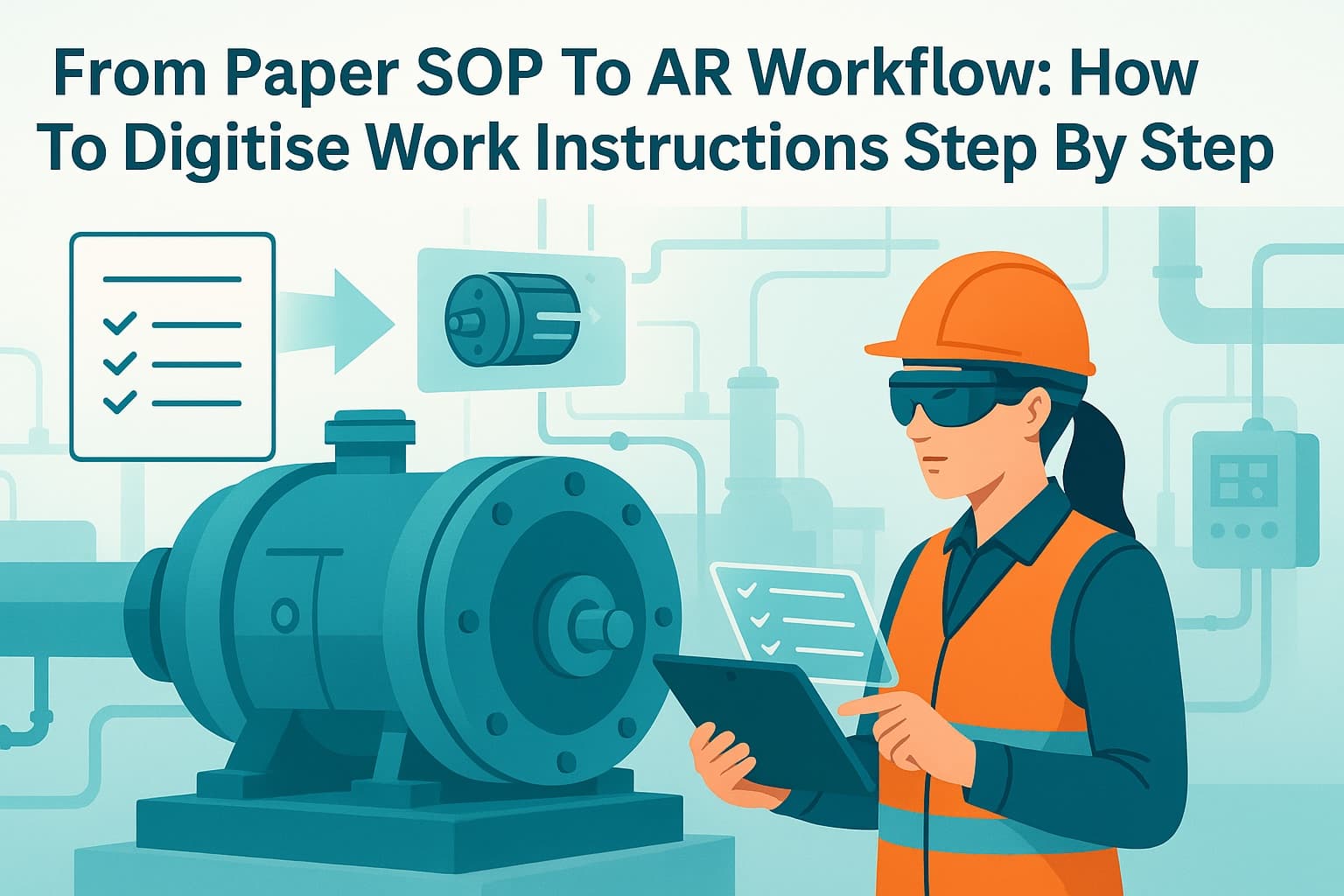
In many industrial environments, change is constant. Equipment is upgraded, processes are optimised, regulations evolve and product variants multiply. Yet SOPs—the documents that tell people how to do their work—often lag far behind. Outdated procedures create risk: errors, inconsistency, compliance gaps and frustration.
Digital work instructions and AR SOPs make it possible to keep procedures current, even in fast-changing environments. By centralising content, simplifying updates and distributing changes instantly, they transform SOP management from a burden into a competitive advantage.
Why traditional SOP management falls behind
Paper SOPs and static digital documents are inherently slow to update:
- Manual revision processes: Changes require drafting, reviewing, approving, printing and distributing new versions—often taking weeks or months.
- Version control chaos: Multiple versions circulate, and operators may unknowingly use outdated procedures.
- Distribution bottlenecks: Getting updated SOPs to every workstation, shift and site is a logistical challenge.
- Training gaps: Even when new SOPs are distributed, ensuring everyone is trained on the changes is difficult.
In fast-changing environments, these delays mean operators are often working from procedures that no longer reflect reality. The gap between documented and actual practice widens over time.
How digital work instructions solve the update problem
Digital work instructions and AR SOPs address these challenges at the root:
Centralised content management
All procedures are stored in a single, cloud-based library. Updates are made once and apply everywhere—no more chasing paper copies or managing multiple file versions.
Instant publishing and distribution
When a procedure changes, the updated digital work instruction is published instantly. Every operator sees the new version the next time they access it—no printing, no distribution delays.
Built-in version control
The system tracks every version, with full history and audit trail. Auditors can see exactly which version was active on any given date, and which version each operator used.
Automatic notifications and training
Operators can be notified when procedures change, and required to review or re-certify on updated content before using it. This closes the training gap automatically.
Easy editing and collaboration
Subject matter experts can update AR work instructions directly—adding steps, photos, warnings or clarifications—without complex authoring tools. Changes are reviewed, approved and published through a streamlined workflow.
Practical tips for keeping AR SOPs current
Keeping digital work instructions up to date requires discipline and process. Here are practical recommendations:
1. Assign ownership
Every AR SOP should have a clear owner responsible for keeping it current. This is typically a process engineer, supervisor or subject matter expert.
2. Build updates into change management
Whenever equipment, processes or regulations change, include AR SOP updates as a required step in the change management process.
3. Use feedback from the floor
Operators often spot issues or improvements first. Provide a simple way for them to flag content that needs updating, and review this feedback regularly.
4. Schedule periodic reviews
Even if no major changes occur, review AR SOPs on a regular schedule (e.g. annually) to catch drift and ensure accuracy.
5. Track adoption and usage
Monitor how often AR work instructions are used and whether operators complete all steps. Low usage or frequent errors may indicate content that needs improvement.
Real-world example: managing regulatory changes in pharma
A pharmaceutical manufacturer faced frequent regulatory updates that required changes to production SOPs. With paper-based documentation, each change took weeks to implement and created compliance risk during the transition.
By moving to digital work instructions, the company achieved:
- Same-day publishing of updated procedures following regulatory changes
- Automatic notifications to affected operators, with acknowledgment tracking
- Full audit trail showing which version was active at any time
Compliance audit findings related to SOP currency dropped to zero, and time spent on SOP administration fell by over 50%.
Who benefits from digital SOP management?
Keeping SOPs up to date with digital work instructions is relevant for:
- Quality managers ensuring procedures reflect current best practices and regulations
- Process engineers responsible for updating procedures as processes evolve
- Operations managers ensuring teams work from accurate, current instructions
- Compliance officers demonstrating audit-ready version control and distribution
Getting started
If your SOPs struggle to keep pace with change, digital work instructions can help. Start by identifying the procedures that change most frequently or pose the greatest compliance risk. A focused pilot can demonstrate the value of centralised, instantly updatable AR SOPs.
Learn more about AR work instructions and SOPs to preserve corporate memory or contact ActARion to discuss your SOP management challenges.
Go deeper
This article is part of our knowledge base on digital work instructions and compliance. For a comprehensive overview, read our whitepaper:
Digital work instructions and AR SOPs for standard work and compliance — Covers how AR SOPs are created, updated, and governed for sustainable compliance.