
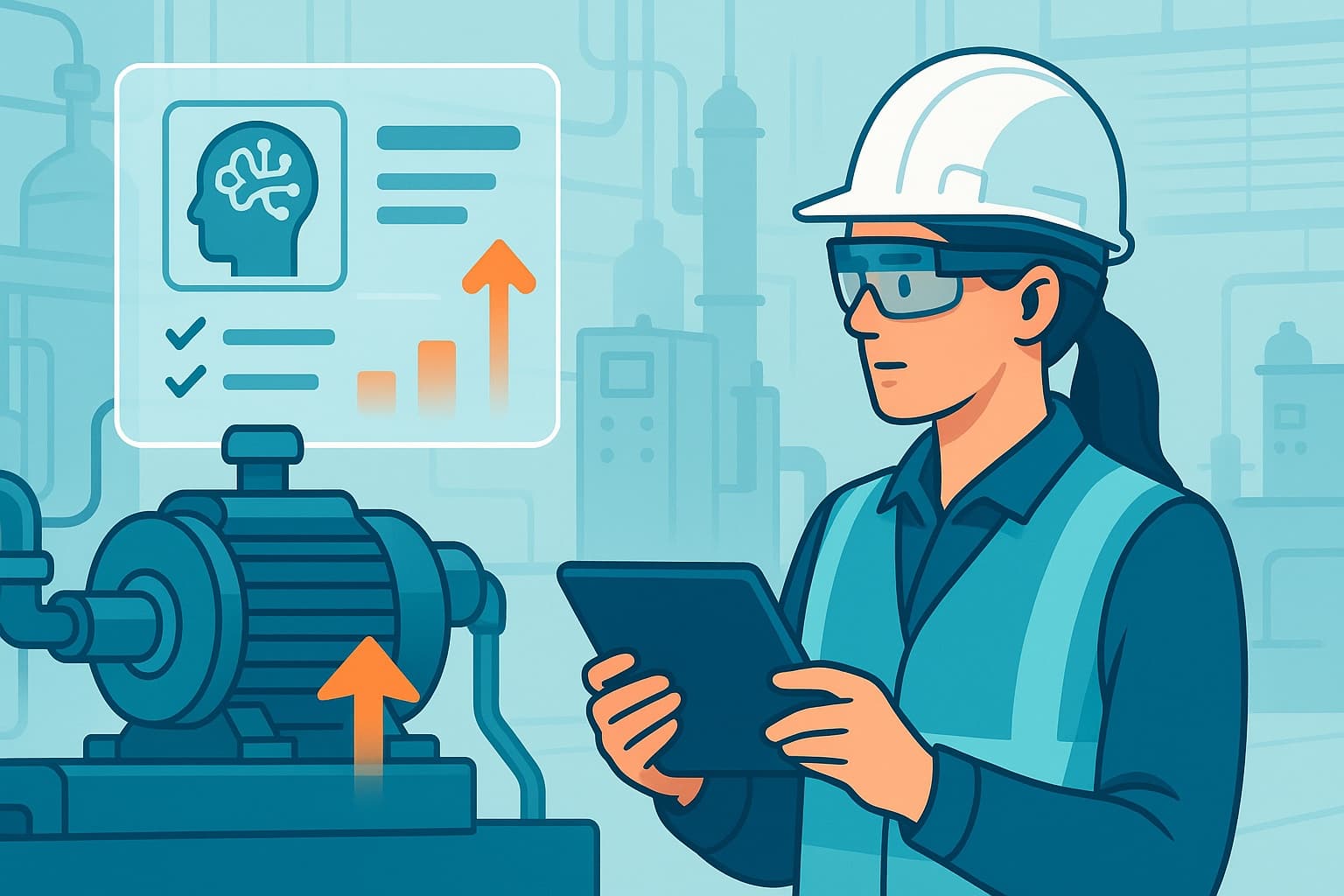
Augmented reality (AR) and artificial intelligence (AI)–guided work instructions are changing how industrial teams work, train, and stay safe. Many operations, HSE, and training leaders have seen promising results in pilots. But scaling from a single site or process to a global, multi-site deployment is a different challenge. This article provides a practical, step-by-step roadmap for moving from pilot to global rollout, ensuring measurable gains in productivity, quality, safety, and workforce readiness.
Why scaling AR and AI–guided work instructions matters now
Many industrial companies have tested AR SOPs and AI–powered digital work instructions. Early pilots often focus on a single production line, maintenance task, or onboarding process. Success stories are common: faster training, fewer errors, and improved compliance.
However, pilots can stall when:
- Results are not tracked or communicated in business terms
- Content creation becomes a bottleneck
- IT and security requirements are underestimated
- Change management and user adoption are not addressed
- There is no clear plan for expanding beyond the first use case
At the same time, the urgency to scale is growing. Industrial leaders face:
- Skills gaps as experienced technicians retire
- Increasing complexity in equipment and processes
- Pressure to reduce downtime and improve OEE (Overall Equipment Effectiveness)
- Stricter compliance and safety standards
Scaling AI and AR–guided work instructions is no longer a “nice-to-have.” It is a strategic lever for productivity, safety, and competitiveness.
Common pitfalls when moving from pilot to rollout
Before mapping the path forward, it is important to recognize typical challenges that can derail AR and AI projects after the pilot phase:
- Fragmented content and standards: Each site or team creates their own AR SOPs, leading to duplication and inconsistent quality.
- Underestimating change management: Operators and technicians may revert to paper or legacy systems if training and engagement are weak.
- Lack of integration: Digital work instructions are not connected to existing systems (e.g., CMMS, ERP, LMS), causing data silos.
- Unclear metrics: Success is measured in anecdotes, not in reduced downtime, improved quality, or safety KPIs.
A structured approach is needed to avoid these pitfalls and deliver sustainable impact at scale.
Building a scalable foundation for AR and AI in operations
Scaling AR and AI–guided work instructions requires more than technology. It demands a blend of governance, content strategy, process integration, and change leadership. The following steps provide a proven roadmap.
Step 1: Define success and secure executive sponsorship
- Align with business goals: productivity, safety, quality, or workforce development
- Define clear, measurable KPIs (e.g., time to competency, error rates, audit findings)
- Secure executive sponsors in operations, HSE, and IT to champion the project
- Build a cross-functional steering group to oversee rollout
Step 2: Standardize content and processes
- Develop standardized templates for AR SOPs and digital work instructions
- Set up content governance: roles, review cycles, approval workflows
- Use modular content to enable reuse across sites and teams
- Establish naming conventions and metadata to support search and reporting
Step 3: Integrate with existing systems
- Map integration points with CMMS, ERP, and LMS platforms
- Ensure single sign-on (SSO) and user provisioning for seamless access
- Plan for secure data management and compliance (GDPR, ISO 27001, etc.)
- Define data flows for capturing work execution, feedback, and analytics
Step 4: Pilot at scale-ready sites
- Select pilot sites with varied processes and user profiles
- Measure baseline performance and define pilot objectives
- Involve end users (technicians, operators, field engineers) in content creation and feedback
- Track adoption, performance, and improvement areas in real time
Step 5: Prepare for change management and training
- Develop a structured change management plan (communication, champions, feedback loops)
- Provide hands-on AR and AI training for technicians and supervisors
- Create support materials: quick-start guides, video tutorials, FAQ
- Recognize and reward early adopters to build momentum
Step 6: Scale iteratively with continuous improvement
- Expand to additional sites or processes using lessons from the pilot
- Use data-driven insights to refine content, processes, and training
- Share success stories and metrics with stakeholders to maintain support
- Regularly review and update content as equipment, standards, or regulations change
How AI and AR–guided work instructions support scale
Well-implemented AI and AR–guided work instructions address key pain points in industrial operations:
- Faster onboarding and upskilling: New technicians learn processes visually, with step-by-step AR overlays and real-time AI feedback.
- Consistent execution: Digital SOPs reduce variability and ensure compliance with best practices and safety standards.
- Remote support: Field engineers can access expert guidance or connect with remote specialists using AR, reducing travel and downtime.
- Continuous improvement: AI-powered analytics identify bottlenecks, error patterns, and training needs for targeted interventions.
A 2023 McKinsey report notes that companies deploying AR and AI at scale in operations see up to 30% faster onboarding, 25% fewer errors, and significant improvements in safety compliance.
Use cases: scaling AR and AI across the industrial enterprise
The roadmap outlined above can be applied to a range of high-impact use cases:
AR onboarding for new technicians
- Visual, step-by-step guidance on equipment setup, calibration, and safety checks
- Immediate feedback and skills validation via AI
- Reduced time to competency and lower risk of errors
Digital work instructions for maintenance and inspections
- Technicians follow standardized, AR–enabled SOPs for preventive and corrective maintenance
- Automatic logging of work steps and compliance data
- Improved accuracy, traceability, and audit readiness
Remote support and troubleshooting
- Field engineers use AR glasses or tablets to connect with remote experts
- Live annotations, AI–powered diagnostics, and guided workflows
- Faster resolution of complex issues and reduced mean time to repair (MTTR)
Safety and quality assurance
- AI and AR–guided checklists for lockout-tagout, confined space entry, and other critical tasks
- Automated documentation for compliance audits
- Fewer incidents and improved safety culture
For more detail on these use cases, see AR onboarding for technicians and digital SOPs for maintenance and inspections.
Addressing key concerns: hardware, content, and user adoption
Scaling AR and AI–guided work instructions raises practical questions. Based on field experience, here is what decision makers need to consider:
Hardware selection and management
- Fit for purpose: Choose AR devices (e.g., tablets, smart glasses) that suit the operating environment (gloves, lighting, safety-rated).
- Fleet management: Plan for device provisioning, updates, and support across sites.
- BYOD vs. company-owned: Balance flexibility and control.
Content creation and localization
- Resource planning: Content development is a significant workload. Assign dedicated resources or work with partners.
- Localization: Translate and adapt instructions for local languages, regulations, and site-specific needs.
- Ongoing updates: Establish processes for continuous improvement as equipment, standards, or processes evolve.
Change management and adoption
- User engagement: Involve end users early and often to ensure relevance and buy-in.
- Training: Provide role-based, hands-on training, not just e-learning.
- Feedback loops: Create channels for ongoing feedback and rapid issue resolution.
What ActARion brings to your AR and AI rollout
ActARion has supported industrial companies through every stage of AR and AI–guided work instruction deployment—from first pilot to global scale. Our approach is grounded in operational realities:
- Proven rollout methodology: Structured roadmap from pilot to scale, tailored to your operational context
- Content strategy and governance: Support for standardizing, managing, and localizing AR SOPs and digital work instructions
- Integration expertise: Seamless connections to CMMS, ERP, and LMS platforms
- Change management: On-site and remote training, user engagement, and adoption support
- Performance analytics: Real-time dashboards and reports aligned with business KPIs
Our team includes operations, HSE, and training professionals with hands-on industrial experience. We help you move beyond pilots to achieve sustainable, measurable results.
Explore a scalable AR and AI rollout in your operations
See how AR and AI–guided work instructions can drive measurable safety, productivity, and quality gains across your sites. Schedule a discovery call to explore a pilot or global rollout strategy tailored to your environment—no commitment required.
- AR onboarding for new technicians
- Digital SOPs for maintenance and inspections
- For further reading on industry trends, see McKinsey’s AR and VR in industry report
Meta description:
A practical roadmap for operations, HSE, and training leaders to scale AR and AI–guided work instructions from pilot to global rollout.
URL slug:
ar-ai-rollout-roadmap
Go deeper
This article is part of our knowledge base on AI and AR–guided work instructions. For a comprehensive overview, read our whitepaper:
AI and AR–guided work instructions: a practical guide for operations teams — Covers what these technologies are, why they are becoming viable now, and how operations teams can apply them to reduce errors, shorten onboarding, and preserve critical know-how.