
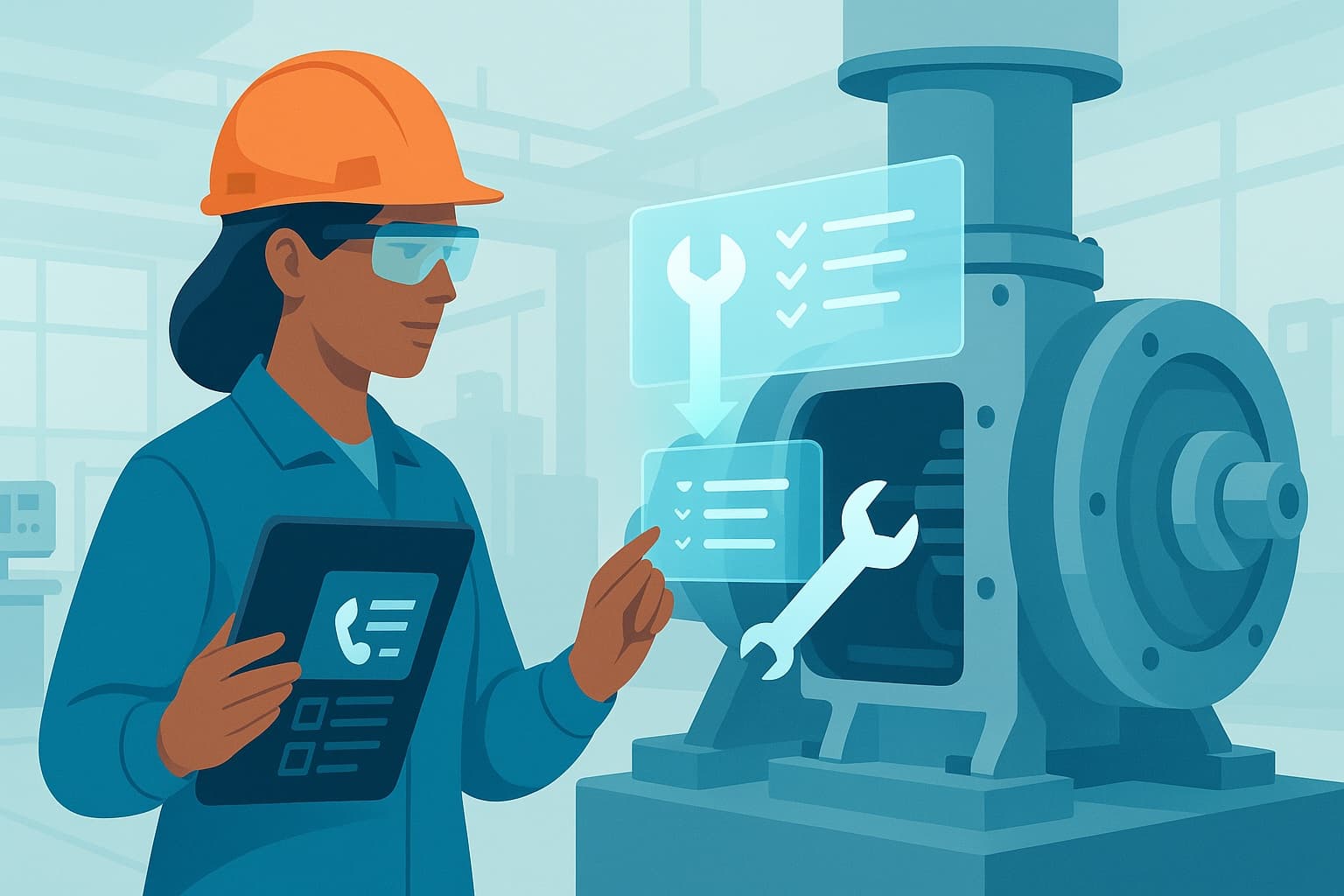
Modern industrial operations face a persistent challenge: ensuring every technician, operator, and field engineer has access to clear, accurate, and up-to-date work instructions—no matter their language or location. As teams grow more diverse and tasks become more complex, traditional text-based manuals and static PDFs fall short. AI-powered solutions now make it possible to convert everyday photos and videos directly into multilingual, step-by-step digital work instructions, transforming the way technical knowledge is captured, shared, and executed.
Why industrial teams need better work instructions now
Operations managers, HSE leaders, and training professionals know that safe and efficient work depends on clear instructions. Yet, many still rely on outdated documentation or informal “shadowing,” which leads to:
- Inconsistent task execution and increased error rates
- Lengthy onboarding and slow skills transfer
- Gaps in compliance, traceability, and audit readiness
- Language barriers within multinational teams
The industrial workforce is changing. According to the European Agency for Safety and Health at Work, language barriers are a top contributor to accidents among migrant workers in manufacturing and construction (EU-OSHA, 2021). Meanwhile, high turnover and the retirement of experienced staff create a “knowledge drain” that cannot be filled by PDFs or static SOPs alone.
The need to digitize, standardize, and localize work instructions is urgent—especially for organizations aiming to boost productivity, reduce downtime, and meet stringent safety and quality standards.
The limitations of traditional documentation and manual translation
Legacy documentation methods struggle to keep up with today’s pace of change:
- Paper manuals and PDFs are hard to update, distribute, and track.
- Video tutorials are useful, but difficult to search, translate, or break down into actionable steps.
- Manual translation processes are slow, costly, and error-prone, often missing technical nuance.
- Informal knowledge transfer (“watch me do it once”) is inconsistent and leaves no audit trail.
These gaps lead to lost productivity, safety incidents, and compliance risks. Multinational teams, in particular, face extra hurdles when work instructions are only available in one language or lack visual context.
How AI turns photos and videos into step-by-step, multilingual instructions
AI-powered platforms now allow industrial teams to upload photos or short video clips of a task being performed—using a smartphone, tablet, or wearable device. The system automatically analyzes the visual content, identifies distinct steps, and generates clear, structured instructions. Here’s how the process works:
Step 1: Capture real-world procedures
Technicians or subject matter experts record themselves performing a task using video or sequential photos (for example, replacing a pump seal or inspecting a valve).
Step 2: AI-driven content analysis
AI models trained on industrial workflows analyze the footage to:
- Segment the process into discrete, logical steps
- Detect tools, parts, safety gear, and environments
- Extract key actions using computer vision and natural language processing
Step 3: Generate digital work instructions
The platform converts the visual data into a draft set of digital work instructions, pairing annotated images or video snippets with concise, action-oriented text.
Step 4: Multilingual translation and localization
Integrated AI translation engines automatically produce versions in multiple languages. Industry-specific glossaries and context-aware models ensure technical accuracy and consistency.
Step 5: Review, approve, and deploy
Supervisors or trainers review the instructions, make edits if needed, and publish them to AR headsets, tablets, or mobile devices. Teams access clear, visual SOPs in their preferred language, at the point of work.
Note: This approach supports continuous improvement: updates can be made rapidly by capturing a new video and regenerating the workflow, ensuring documentation always matches current best practices.
Where AI and AR–guided work instructions deliver value
AI and AR–enabled digital instructions offer measurable benefits for industrial teams, especially in:
Safety-critical procedures
- Lockout/tagout sequences
- Confined space entry
- Hazardous material handling
Maintenance, repair, and inspection
- Step-by-step equipment servicing
- Visual fault diagnosis and reporting
- Standardized inspection routines
Quality assurance and compliance
- Documented process adherence for audits
- Visual proof of completion and sign-off
- Rapid deployment of updated procedures
Training and onboarding
- Faster ramp-up for new hires or transfers
- Multilingual support for diverse teams
- Just-in-time learning at the worksite
A recent study by the Fraunhofer Institute found that AR-guided instructions reduced error rates in assembly tasks by 40% and cut training time by up to 60% compared to paper-based SOPs (Fraunhofer IAO, 2023).
Addressing real-world challenges: hardware, content, and change management
Decision makers often raise valid concerns about implementing AI and AR–guided work instructions:
Hardware readiness
Most modern smartphones, tablets, and AR headsets support the capture and delivery of visual instructions. Choosing the right device depends on your environment (e.g., ATEX zones, outdoor use, hands-free requirements).
Content creation and maintenance
AI accelerates content generation, but process owners should review and validate instructions for accuracy and compliance. Establishing clear ownership and update cycles is essential.
Language and technical accuracy
AI translation engines have advanced rapidly, but technical language and local jargon require review. Integrating industry-specific glossaries and SME validation ensures clarity.
Change management
Effective roll-out involves:
- Training staff to capture and review content
- Communicating the benefits (faster onboarding, fewer errors)
- Demonstrating compliance and traceability improvements
Note: ActARion supports organizations with onboarding, governance, and best practices for sustainable adoption of digital work instructions.
What ActARion brings to your operation
ActARion specializes in helping industrial companies digitize, standardize, and scale their procedures using AI and AR–guided work instructions. Our platform enables you to:
- Rapidly convert existing photos and videos into structured, multilingual SOPs
- Distribute instructions directly to AR headsets, tablets, and mobile devices
- Ensure every technician receives accurate, visual, and localized guidance—every time
- Maintain a full audit trail for compliance and continuous improvement
We combine proven AI models, robust translation workflows, and deep industrial expertise to ensure your documentation is always current, accurate, and accessible to every team member.
Explore this in your organization
If you want to see how AI can turn your photos and videos into multilingual work instructions—improving safety, productivity, and training outcomes—schedule a discovery call with ActARion. This is an exploratory conversation, not a commitment.
You can learn more about how AR SOPs improve training and onboarding, or see how digital work instructions support compliance and quality. For an industry perspective, see the EU-OSHA report on language barriers in industrial safety.
Ready to make your procedures smarter, safer, and more accessible? Request a demo for your process.
Go deeper
This article is part of our knowledge base on AI and AR–guided work instructions. For a comprehensive overview, read our whitepaper:
AI and AR–guided work instructions: a practical guide for operations teams — Covers what these technologies are, why they are becoming viable now, and how operations teams can apply them to reduce errors, shorten onboarding, and preserve critical know-how.