
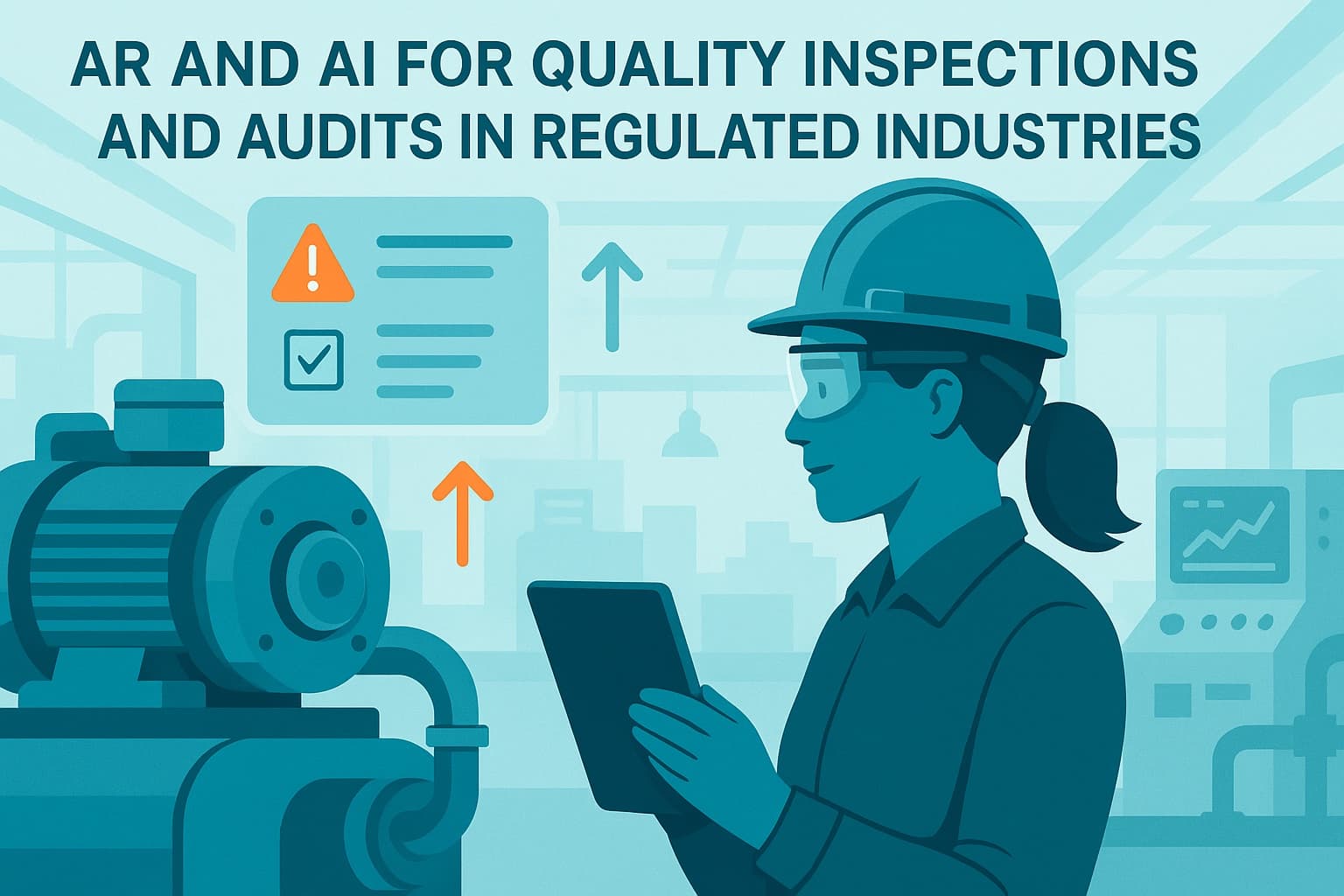
Inspection consistency is one of the biggest challenges in maintenance. Different technicians inspect the same equipment differently—focusing on different areas, using different methods, documenting at different levels of detail. The result is variable data that is hard to compare, analyse or act on.
AR SOPs offer a path to standardised inspections. By guiding every technician through the same procedure in the same way, they reduce variability, improve data quality and make maintenance programmes more predictable.
The problem with inconsistent inspections
Inspection inconsistency creates multiple problems:
Unreliable data
When inspections are performed differently, the resulting data is unreliable. "Pass" from one technician may mean something different than "pass" from another. Trends are hidden in noise.
Missed issues
Variable inspections mean variable coverage. Some components get thorough attention; others are overlooked. Issues that one technician would catch are missed by another.
Difficult comparisons
Comparing inspection results across technicians, shifts or sites is difficult when methods vary. Benchmarking and best-practice sharing become impossible.
Limited improvement
Without consistent data, it is hard to improve. Planners cannot identify patterns, optimise schedules or target interventions effectively.
How AR SOPs standardise inspections
AR SOPs address inspection inconsistency at the root:
Same procedure, every time
AR SOPs define the exact sequence of inspection steps. Every technician follows the same procedure, in the same order, checking the same points. There is no room for individual variation.
Visual guidance reduces interpretation
Instead of interpreting written instructions, technicians see visual cues overlaid on the equipment. "Check the seal" becomes "look here, at this angle, for these conditions." Interpretation is minimised.
Mandatory steps and checkpoints
AR systems enforce step completion. Technicians cannot skip ahead without completing each step. Critical checkpoints require explicit confirmation or evidence capture.
Consistent data capture
AR SOPs define what data to capture at each step—photos, measurements, condition ratings. Every inspection produces the same data fields, making analysis straightforward.
The result: fewer surprises, better data
Organisations that standardise inspections with AR SOPs report:
- Higher consistency: Inspection execution is uniform across technicians, shifts and sites
- Better data quality: Comparable, structured data enables meaningful analysis
- Fewer surprises: Issues are caught more reliably, reducing unexpected failures
- Actionable insights: Maintenance planners can identify trends, compare assets and optimise programmes
Real-world example: fleet inspections in logistics
A logistics company struggled with inconsistent vehicle inspections. Some drivers completed thorough checks; others rushed through. Breakdowns often occurred shortly after "passed" inspections.
By implementing AR SOPs for vehicle inspections:
- Every inspection followed the same 25-point checklist
- Photo capture was required at key checkpoints
- Condition ratings were standardised (good, fair, attention needed)
Results after three months:
- Inspection consistency improved dramatically (measured by audit)
- Issue detection rate increased by 50%
- Breakdowns following inspections dropped by 35%
Keys to success
To standardise inspections effectively with AR SOPs:
- Define the standard: Work with experts to define the best-practice inspection procedure
- Be specific: Clear, visual instructions leave less room for interpretation
- Enforce compliance: Use AR system features to ensure steps are completed
- Capture consistent data: Define data fields and formats for every checkpoint
- Analyse and act: Use the data to improve inspections and maintenance programmes
Getting started
If inspection inconsistency is undermining your maintenance programme, AR SOPs can help. Start by standardising your highest-priority inspections, then expand as you build capability.
Learn more about AR preventive maintenance with data-driven insights or contact ActARion to discuss your inspection standardisation goals.
Go deeper
This article is part of our knowledge base on digital work instructions and compliance. For a comprehensive overview, read our whitepaper:
Digital work instructions and AR SOPs for standard work and compliance — Covers how AR SOPs add value for quality inspections, safety-critical procedures, and changeovers.