
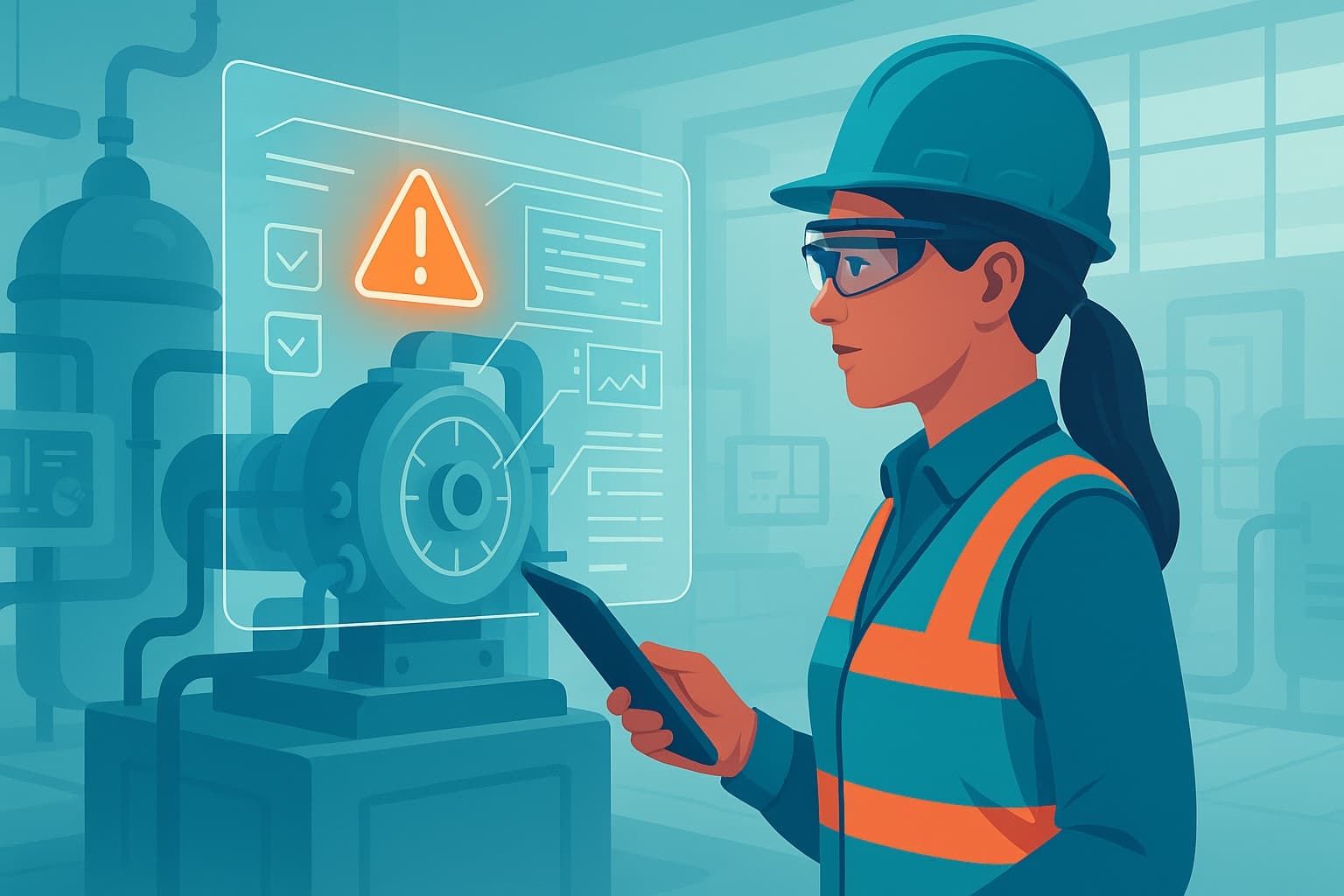
Augmented reality (AR) is steadily moving from pilot projects to daily operations in industrial environments. Yet, many companies still struggle to turn promising AR trials into measurable improvements in productivity, safety, and workforce readiness. The main keyword here is implementation support: the difference between failed pilots and successful AR adoption often comes down to the role of experienced partners.
Why AR adoption is challenging for industrial teams
Industrial companies face unique barriers when introducing new technologies like AR. Operations managers and HSE leads are under pressure to deliver results without disrupting critical processes or compromising safety. Training and L&D managers need to ensure that digital work instructions are accurate, up-to-date, and integrated into existing workflows.
Common challenges include:
- Complex, high-stakes environments where downtime is costly
- Resistance to change from experienced technicians and operators
- Integration with legacy systems and varied hardware
- High expectations for safety, compliance, and quality
- Limited in-house expertise in AR content creation and deployment
While AR–guided work instructions and digital SOPs can address these issues, successful adoption requires much more than software installation. The implementation phase is where most projects succeed or fail.
The cost of failed or partial AR deployments
Without strong implementation support, AR initiatives often stall at the pilot stage. According to a 2023 Capgemini report, only 10% of industrial AR pilots move into scaled deployment. The most common reasons:
- Insufficient change management
- Poor integration with existing processes
- Content that is outdated, incomplete, or hard to maintain
- Lack of user buy-in and ongoing support
- Unclear ROI or business impact
These failures waste time and budget, and can create skepticism about future digital transformation efforts. For companies operating in regulated, safety-critical sectors, the risks of a failed deployment go beyond sunk costs—they can also impact compliance, audit readiness, and workforce safety.
Why implementation support is critical for AR adoption
Implementation support is not just about technical setup. It covers the full lifecycle from initial assessment to ongoing optimization. The right partner brings:
- Process mapping and SOP digitization: Translating complex procedures into clear, actionable AR-guided steps
- Change management expertise: Helping teams adapt to new tools and workflows
- Integration know-how: Connecting AR solutions with ERP, maintenance, and training systems
- Content development: Rapidly creating and updating digital work instructions that reflect real-world tasks
- User training and support: Building confidence and competence among technicians, operators, and supervisors
- Governance and compliance: Ensuring every digital SOP meets regulatory and quality standards
This end-to-end support is what turns a promising AR pilot into a sustainable operational improvement.
How partners accelerate AR and AI–guided work instruction success
Experienced AR implementation partners understand the realities of industrial environments. They work closely with your teams to:
Assess readiness and define use cases
A credible partner starts by mapping existing SOPs, identifying high-impact use cases, and aligning AR adoption with business priorities. For example:
- Reducing downtime during complex machine changeovers
- Standardizing inspections and audits for safety-critical assets
- Accelerating onboarding for new technicians through AR SOPs
- Supporting remote maintenance with step-by-step digital instructions
This upfront work ensures AR is deployed where it can deliver measurable ROI.
Develop and digitize SOPs for AR
Many companies underestimate the effort required to create effective digital work instructions. Partners help by:
- Interviewing subject matter experts
- Capturing tacit knowledge from experienced technicians
- Structuring content for AR delivery (text, images, video, 3D models)
- Testing and iterating instructions in real work environments
This results in AR SOPs that are accurate, usable, and easy to update as processes change.
Integrate AR solutions with existing systems
Seamless integration is essential for adoption. Partners provide:
- Technical integration with maintenance, quality, and training platforms
- Hardware selection and configuration (smart glasses, tablets, etc.)
- User authentication and access control
- Data capture and analytics for continuous improvement
This reduces friction and ensures AR fits into your daily operations.
Train users and drive change
Change management is a major barrier in industrial settings. Partners support successful rollout by:
- Running train-the-trainer sessions
- Providing on-site and remote support
- Creating feedback loops for continuous improvement
- Addressing objections and demonstrating quick wins
Effective training builds trust and accelerates acceptance among technicians and operators.
Monitor, measure, and optimize
Finally, partners help you track results and optimize over time:
- Setting up KPIs for productivity, safety, and quality
- Analyzing usage data to identify bottlenecks
- Updating digital work instructions based on feedback
- Scaling successful use cases to new sites or teams
This ensures ongoing value and helps justify further investment in AR and AI–guided work instructions.
Real-world results: what successful AR implementation looks like
When AR is deployed with strong implementation support, the results are measurable and impactful. Examples from industrial sectors include:
- 30% reduction in error rates during complex assembly processes after deploying AR SOPs
- Up to 40% faster onboarding for new technicians using digital work instructions
- 25% fewer safety incidents in maintenance operations where AR guides reinforce compliance
- Consistent audit readiness as all procedures are documented, tracked, and updated centrally
These outcomes are only possible when AR adoption is approached as an operational transformation—not just a technology project.
Addressing common concerns: from hardware to change management
Decision makers often raise legitimate concerns about AR adoption:
- Hardware compatibility: Partners help select, test, and configure devices suited to your environment (ATEX-certified, ruggedized, etc.).
- Content creation workload: Implementation support includes rapid SOP digitization and ongoing updates, reducing the burden on internal teams.
- Change resistance: Structured training and clear communication address skepticism and demonstrate value early.
- Integration complexity: Experienced partners manage technical integration, so AR works seamlessly with existing systems.
- Data security and compliance: Governance frameworks ensure that digital work instructions meet all regulatory and data privacy requirements.
These are not trivial challenges, but they are manageable with the right support.
What ActARion brings as your AR implementation partner
ActARion specializes in helping industrial companies deploy AI and AR–guided work instructions at scale. We combine deep industry knowledge with proven implementation methods to deliver:
- Rapid process mapping and SOP digitization for AR delivery
- Change management and user training tailored to industrial teams
- Integration expertise with your existing maintenance, quality, and training systems
- Ongoing support and optimization to ensure sustained ROI
- Governance and compliance frameworks for regulated industries
Our approach is collaborative and transparent. We work alongside your operations, HSE, and training leaders to deliver measurable improvements in productivity, safety, and workforce readiness.
Note: For an overview of how AR SOPs can accelerate onboarding and knowledge transfer, see AR onboarding for technicians. To learn more about integrating AR with your existing platforms, explore digital work instructions in maintenance.
Explore what this looks like in your organisation
If you want to see how expert implementation support can de-risk and accelerate AR adoption for your teams, schedule a no-commitment discovery call with ActARion. We’ll review your current processes, identify high-impact AR use cases, and outline a practical path to measurable results.
Get started with a discovery call, or download our AR implementation readiness checklist to assess your next steps. For additional background on AR in industry, see the Capgemini Virtual and Augmented Reality in Operations report.
Meta description:
Explore why expert implementation partners are critical for successful AR adoption in industrial environments. For operations, HSE, and training leaders.
URL slug:
role-of-partners-ar-adoption