
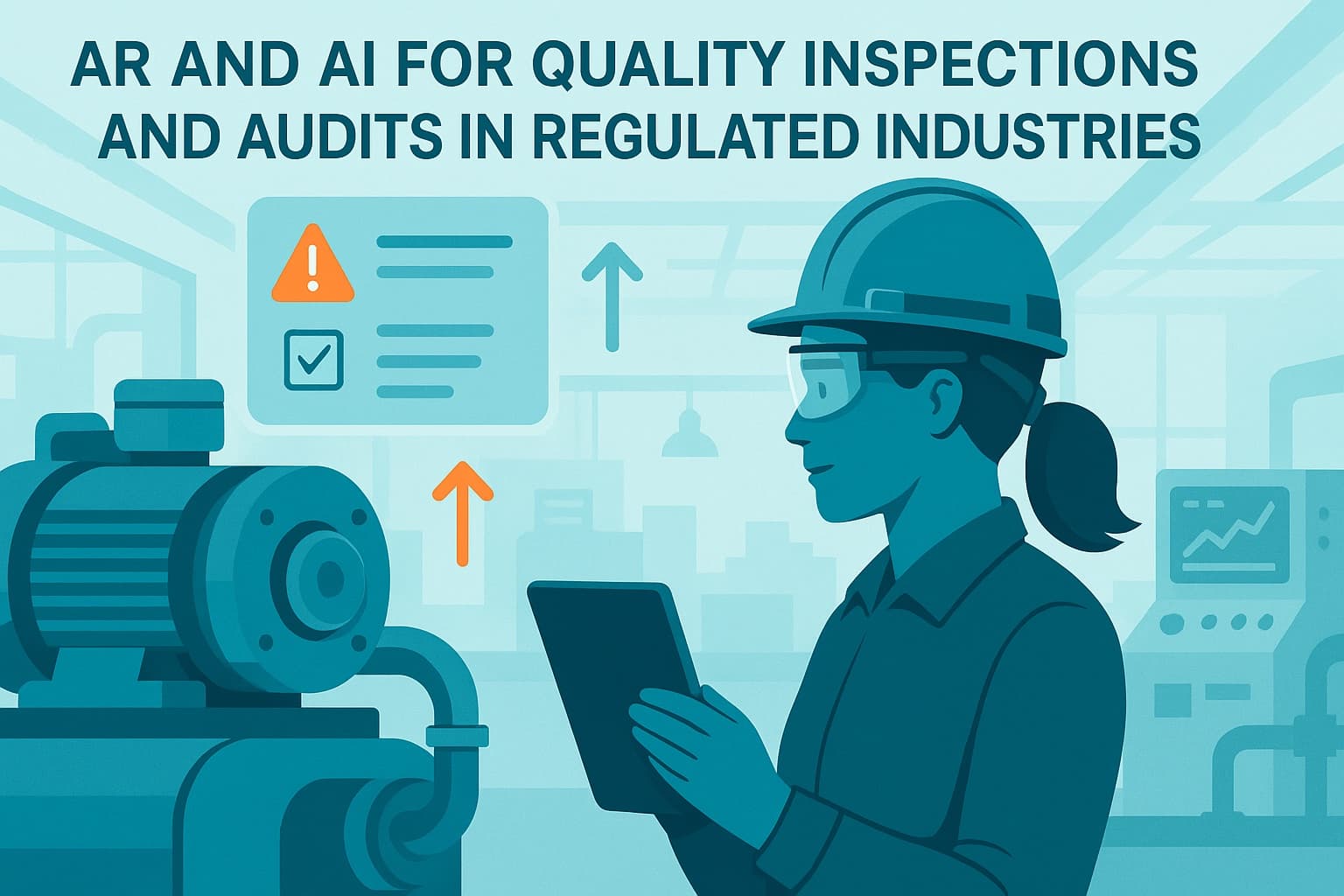
Preventive maintenance is designed to catch issues before they become failures. But in practice, many preventive programmes struggle to deliver on this promise. Inspections are rushed, steps are skipped, subtle warning signs are missed. When breakdowns occur, the question often arises: "Didn't we just do maintenance on this?"
AR work instructions transform preventive maintenance from a checkbox exercise into a genuine early-warning system. By guiding technicians through every step and capturing detailed execution data, they ensure issues are identified and addressed before they escalate.
Why traditional preventive maintenance misses issues
Traditional preventive maintenance often falls short of its potential:
Inconsistent execution
Different technicians perform the same inspection differently. Some are thorough; others rush through checklists. Critical steps may be skipped or performed superficially.
Limited visibility
Paper checklists capture completion, but not quality. There is no way to know whether a technician actually looked at the component or just checked the box.
Missed warning signs
Technicians may notice something unusual but fail to document it—or document it in a way that is not actionable. Warning signs get lost in handwritten notes or verbal handovers.
Reactive improvement
Without data on how maintenance is actually performed, it is hard to improve. Organisations react to failures rather than proactively strengthening their programmes.
How AR work instructions catch issues early
AR work instructions address these gaps by making preventive maintenance more structured, visible and data-rich:
Guided, step-by-step execution
AR overlays guide technicians through every inspection step. Each check is clearly defined, with visual cues showing exactly what to look for and where. Steps cannot be skipped.
Evidence capture at critical points
For key checks, AR systems prompt technicians to capture photos, videos or measurements. This creates a visual record of condition—not just a checkmark.
Structured reporting of anomalies
If a technician notices something unusual, the AR system provides a structured way to document it—with images, notes and severity classification. This ensures anomalies are captured consistently and routed for follow-up.
Data for analysis and improvement
Execution data—timing, completion, anomalies, evidence—flows into analytics systems. Maintenance planners can identify patterns, spot assets that need attention and improve inspection procedures.
The impact: catching issues before failure
Organisations using AR work instructions for preventive maintenance report significant improvements in early issue detection:
- More anomalies identified: Structured inspections and evidence capture surface issues that were previously missed
- Faster response: Anomalies are documented clearly and routed immediately for action
- Reduced unplanned downtime: Issues caught early are fixed before they cause failures
- Better asset reliability: Over time, preventive programmes become more effective at maintaining equipment health
Real-world example: turbine inspections in energy
An energy company struggled with turbine inspection consistency. Different technicians focused on different areas, and several unexpected failures traced back to missed warning signs during preventive inspections.
By implementing AR work instructions:
- Every inspection followed the same structured procedure
- Technicians captured photos at defined checkpoints
- Anomalies were documented in a standard format with severity ratings
Within six months:
- Anomaly detection rate increased by 45%
- Unplanned turbine downtime fell by 30%
- Inspection data revealed patterns that informed targeted interventions
Keys to success
To maximise the issue-catching potential of AR-guided preventive maintenance:
- Define clear inspection criteria: Technicians need to know what "good" and "bad" look like at each checkpoint
- Require evidence at critical steps: Photo or video capture ensures thorough inspection
- Create anomaly workflows: Documented issues should flow to planners for review and action
- Analyse and act on data: Use execution data to identify trends and improve programmes
Getting started
If your preventive maintenance programme is not catching issues before they escalate, AR work instructions can help. Start by identifying inspections where early detection matters most, implement AR guidance with evidence capture and build a culture of thorough, data-driven maintenance.
Learn more about AR preventive maintenance with data-driven insights or contact ActARion to discuss your preventive maintenance challenges.