
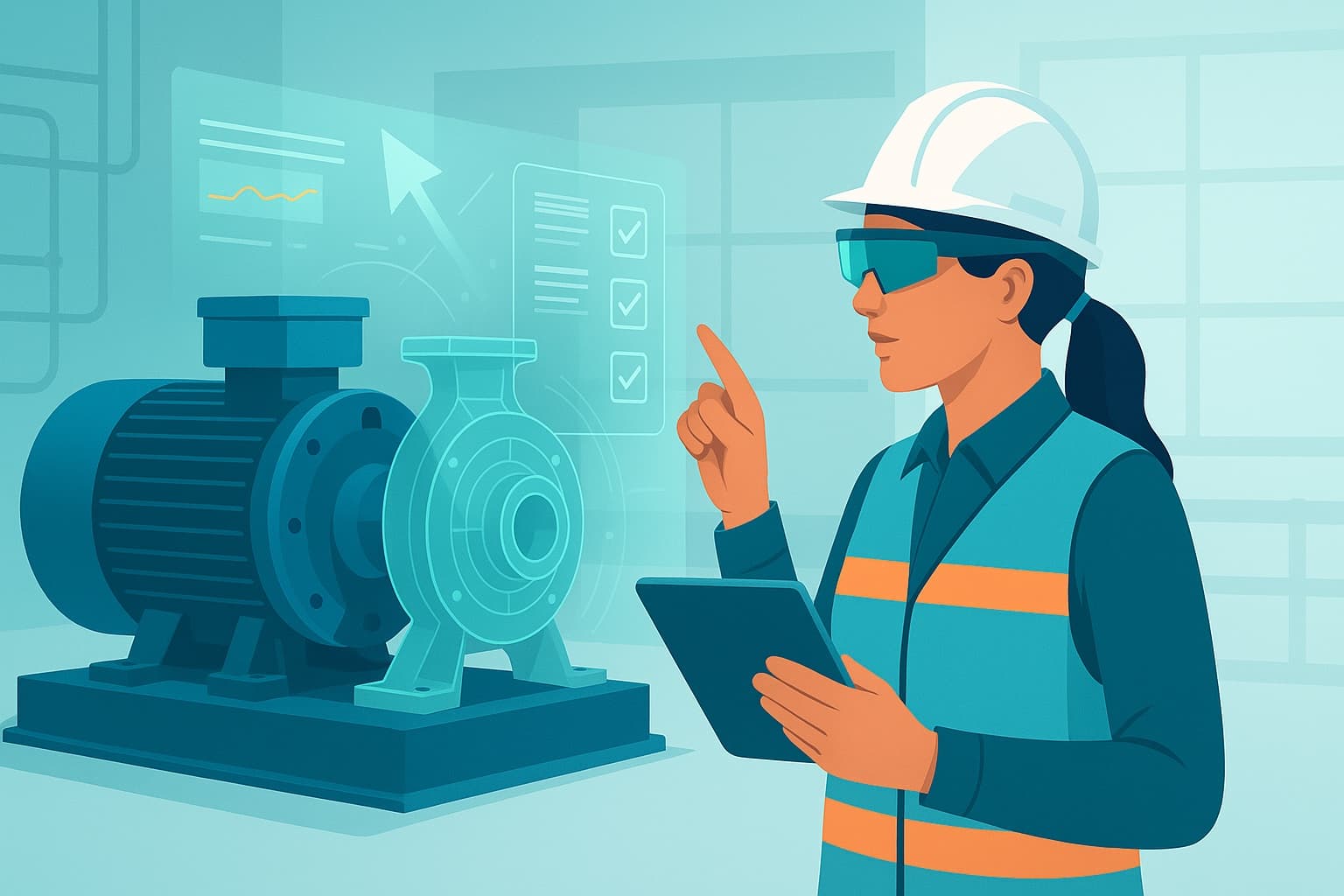
The format of work instructions—whether text, video, 3D models, or augmented reality—directly affects how safely and accurately teams perform critical tasks. For industrial operations managers, HSE leads, maintenance supervisors, and L&D professionals, choosing the right format is not just about convenience. It’s a strategic decision that shapes safety, compliance, productivity, and knowledge transfer at scale.
Why the format of work instructions matters now
Industrial environments are under increasing pressure to maintain high safety standards, reduce downtime, and adapt to workforce changes. Many organisations still rely on static documents, PDFs, or legacy videos for standard operating procedures (SOPs). But as processes grow more complex, and experienced technicians retire, the limitations of these formats become more apparent.
Key challenges faced by decision makers include:
- Complex machinery and evolving compliance requirements
- Diverse teams with varying experience levels and native languages
- High cost of errors, rework, and non-compliance
- Difficulty onboarding new hires quickly and safely
Research from the International Journal of Industrial Ergonomics shows that unclear or poorly formatted instructions are a root cause of preventable incidents in manufacturing and process industries. In regulated sectors, authorities such as OSHA and the European Agency for Safety and Health at Work emphasise the importance of clear, accessible instructions for risk reduction and process quality.
The evolution of instruction formats in industry
The way instructions are delivered has changed dramatically in recent decades. Understanding the strengths and limitations of each format is essential for making informed decisions.
Text and paper-based SOPs
- Easy to distribute, but often hard to follow in the field
- Prone to misinterpretation, especially for complex or infrequent tasks
- Difficult to keep up to date—minor changes require version control
- Lack visual cues, increasing cognitive load and error risk
Video-based instructions
- Useful for demonstration, but passive—no interaction or step tracking
- Hard to search or reference during live work
- Updates require full re-recording
- Not always practical in noisy or hazardous environments
3D models and digital twins
- Offer spatial clarity for complex assemblies or troubleshooting
- Require specialised hardware or software to access
- Still often separate from real-world context
AR SOPs and AI and AR–guided work instructions
- Overlay step-by-step guidance directly onto real equipment
- Enable hands-free operation, reducing distractions
- Adapt to user input, pace, and errors in real time
- Can integrate with sensor data, checklists, and compliance tracking
How instruction format impacts safety and quality
The link between instruction format and safety or quality outcomes is direct and measurable. Consider these scenarios:
Scenario 1: Maintenance error due to text-based SOPs
A field engineer follows a printed checklist to perform a pressure valve replacement. The instructions are generic and lack visuals. A missed torque specification leads to a leak, causing unplanned downtime and a safety review. Investigation finds that the text format required the engineer to mentally map steps onto the actual equipment, increasing cognitive load and risk of error.
Scenario 2: Faster onboarding with AR SOPs
A new technician is assigned to a packaging line. Instead of shadowing a senior colleague for weeks, they use AR glasses that overlay each step of the setup process, with 3D animations and real-time feedback. The technician completes the task independently, with zero deviations, in half the usual time. The digital work instructions adapt to their pace and confirm each step before proceeding.
Scenario 3: Quality improvement via digital work instructions
A pharma plant introduces AI and AR–guided work instructions for batch changeovers. Operators receive contextual prompts, visual cues, and automatic validation of critical checkpoints. Deviations are logged automatically, ensuring full traceability for audits. Within three months, the site reports a 30% drop in non-conformities and a measurable reduction in batch rework.
Why change is needed now
The cost of sticking with outdated instruction formats is rising:
- Increased incident rates due to misinterpretation or skipped steps
- Longer onboarding times, impacting workforce flexibility
- Higher training costs as experienced staff retire or move on
- Missed opportunities for continuous improvement and digital traceability
At the same time, industrial environments face growing regulatory scrutiny and the need to demonstrate robust, auditable processes. Digital transformation is no longer optional. The format of your work instructions is a foundational choice that determines how effectively your teams can adapt, learn, and perform in the field.
How AI and AR–guided work instructions deliver measurable value
Switching from static instructions to AI and AR–guided work instructions is not just a technology upgrade. It’s a practical way to:
- Reduce cognitive load by providing information in context, at the right time and place
- Minimise error rates with step-by-step visualisation and real-time validation
- Enable hands-free operation, improving safety and compliance in hazardous environments
- Accelerate onboarding and upskilling by making expert knowledge accessible to all
- Streamline audits and continuous improvement with automatic traceability
A 2023 case study in the Journal of Manufacturing Systems found that AR SOPs reduced assembly errors by over 40% compared to traditional paper-based instructions. Operators reported higher confidence and faster completion times, especially for new or infrequent tasks.
Key features of effective AI and AR–guided work instructions
- Intuitive 3D overlays that match the physical environment
- Interactive checklists and user input tracking
- Integration with enterprise systems (e.g., ERP, EHS, QMS)
- Support for multiple languages and accessibility needs
- Real-time data capture for compliance and process improvement
Overcoming common objections: hardware, content, and change management
Adopting new instruction formats raises valid concerns. Industrial leaders need to address these areas proactively:
- Hardware investments: Modern AR solutions can run on standard tablets, smartphones, or affordable smart glasses. Pilot projects help determine the right fit before scaling.
- Content creation: Converting legacy SOPs to digital or AR formats requires upfront effort, but modular authoring tools and expert support accelerate the process.
- Change management: Successful adoption hinges on clear communication, training, and involvement of end users from the start. Demonstrating early wins builds momentum.
For teams responsible for AR onboarding for technicians, maintenance SOP digitisation, or HSE compliance, these challenges are familiar—but manageable with the right partner and approach.
What ActARion brings to instruction format transformation
ActARion works with industrial companies to make AI and AR–guided work instructions a practical reality. Our approach is grounded in:
- Deep sector expertise in safety, quality, and operational excellence
- Proven frameworks for migrating SOPs from text and video to interactive, AR-enabled formats
- Scalable solutions that integrate with your existing systems and processes
- Support for governance, content management, and continuous improvement
We help decision makers justify investment with data-driven ROI models and phased implementation strategies. Our clients see measurable gains in safety, quality, and workforce readiness within months—not years.
Explore the impact of instruction formats in your organisation
If you’re responsible for safety, quality, or operational performance, the format of your work instructions is a lever you control. Explore how AI and AR–guided work instructions can reduce errors, speed up onboarding, and support compliance in your specific environment.
Schedule a discovery call to see how ActARion helps teams move from static SOPs to interactive, digital work instructions. This is an exploratory conversation—no commitment required.
- Learn more about AR SOPs for compliance and safety
- See our FAQ on AI and AR–guided work instructions
- Read about recent trends in industrial AR adoption