
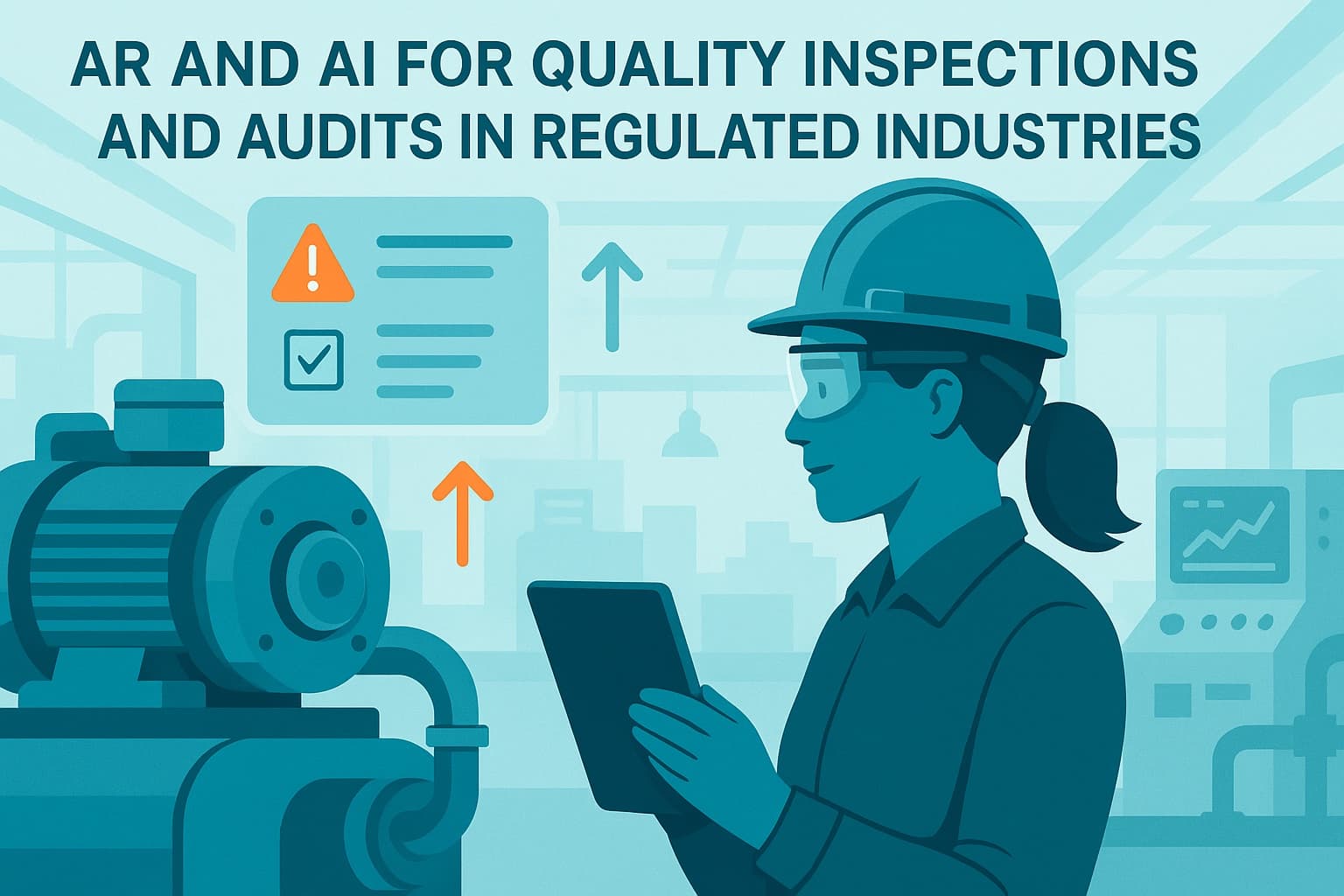
For maintenance technicians, work routines have remained remarkably consistent for decades. Receive a work order, find the procedure, travel to the asset, perform the work, complete the paperwork. Digital work instructions are changing this routine—not by replacing technicians, but by making their work easier, faster and more effective.
This article explores how digital work instructions transform the daily routine of maintenance technicians, from task assignment to documentation.
The traditional maintenance routine
Before digital work instructions, a typical maintenance technician's day might look like this:
- Receive work orders: Paper-based or printed from the CMMS
- Find procedures: Search for the right SOP in binders, shared drives or personal notes
- Gather materials: Collect tools, parts and safety equipment
- Travel to the asset: Navigate to the equipment location
- Perform the work: Execute the procedure, consulting the SOP as needed
- Document completion: Fill out paper checklists, write notes, record readings
- Return paperwork: Submit completed forms to supervisors or admin staff
- Move to the next task: Repeat
This routine has several pain points: time spent searching for information, reliance on memory during execution, tedious documentation and limited visibility for supervisors.
The digital work instruction routine
With digital work instructions, the maintenance routine transforms:
1. Receive work orders digitally
Work orders arrive on the technician's mobile device (tablet, smartphone or smart glasses) with all relevant information attached—asset details, location, procedure link, parts required.
2. Access procedures instantly
One tap opens the correct digital work instruction. No searching, no version confusion. The procedure is always current and specific to the task.
3. Follow step-by-step guidance
During execution, the technician follows visual, step-by-step instructions. AR overlays show exactly what to do and where, reducing reliance on memory and interpretation.
4. Capture evidence automatically
At critical checkpoints, the system prompts for photos, readings or confirmations. Evidence is captured in context, linked to the work order and stored automatically.
5. Document as you go
Completion data, notes and anomalies are recorded during execution—not after. By the time the task is finished, documentation is complete.
6. Sync and move on
Work order completion syncs to the CMMS automatically. Supervisors have real-time visibility. The technician moves to the next task without paperwork delays.
What changes for technicians?
Digital work instructions change the technician experience in several ways:
Less time searching
Procedures are at their fingertips. No more hunting through binders or shared drives.
Clearer guidance
Visual, contextual instructions reduce ambiguity. Technicians know exactly what to do, even on unfamiliar tasks.
Reduced paperwork
Documentation happens during the task, not after. There is no backlog of forms to complete at the end of the shift.
More consistent execution
Following the same guided procedure every time reduces errors and variability.
Better support for learning
New technicians can perform tasks confidently with AR guidance, accelerating their development.
What stays the same?
Digital work instructions do not change the fundamentals of maintenance work:
- Technical skills matter: Technicians still need to understand equipment, diagnose issues and apply judgment.
- Safety first: Digital tools reinforce safety procedures, but do not replace safety training and awareness.
- Teamwork: Collaboration with supervisors, planners and other technicians remains essential.
Digital work instructions enhance the technician's capabilities—they do not replace them.
Real-world feedback from technicians
Technicians who have adopted digital work instructions report:
- "I spend less time looking for information and more time doing the work."
- "The step-by-step guidance helps me do tasks I've never done before."
- "Documentation used to be the worst part of the job. Now it just happens."
- "I feel more confident that I'm doing things right."
Not every technician adapts immediately—change management matters. But most find that digital work instructions make their jobs easier once they get used to the new routine.
Getting started
If you want to transform the daily routine of your maintenance technicians with digital work instructions, start with a focused pilot. Select a group of tasks, deploy digital guidance and gather feedback. Measure the impact on time, quality and technician satisfaction.
Learn more about AR preventive maintenance with data-driven insights or contact ActARion to discuss how digital work instructions can support your maintenance teams.