
A digital library of work and safety instructions can transform how teams in industrial environments work—if people actually use it. Too often, digital SOPs and safety documents are created but left untouched, buried in shared drives or complicated platforms. The real challenge is building a digital library that is accessible, relevant, and trusted by technicians, operators, and field engineers. For operations, HSE, and training leaders, the goal is clear: make every critical instruction available at the point of need, in a format teams will rely on.
Why most digital libraries fail to deliver value
Many organisations invest in digital work instructions and AR SOPs, but the results often fall short. Content gets outdated, navigation is confusing, and usage rates are low. This is not just an IT issue; it affects productivity, safety, and compliance.
Common reasons digital libraries underperform:
- Instructions are too generic, hard to find, or not tailored to real tasks.
- Teams lack confidence in the accuracy or relevance of the content.
- Updates are slow, and version control is weak.
- Access is limited to desktops or requires cumbersome logins.
- No feedback loop for teams to suggest improvements or report errors.
A 2023 survey from the National Safety Council found that 62% of industrial safety managers cite "out-of-date or hard-to-access procedures" as a top operational risk. When work instructions aren't used, incidents increase, onboarding drags out, and process quality declines.
Why now: Skills gaps, safety demands, and operational pressure
Industrial organisations are facing a convergence of challenges:
- Skills gaps are widening as experienced technicians retire.
- Regulatory and client demands for traceable compliance are rising.
- Production targets are tighter, with little room for error.
- Teams are more mobile, with work happening across plants, sites, and shifts.
Traditional paper manuals and static PDFs cannot keep up with these needs. Teams require up-to-date, searchable, and context-aware instructions—available where the work happens. Digital libraries must deliver guidance on any device, support rapid updates, and provide usage data to drive continuous improvement.
How AI and AR–guided work instructions drive adoption
The key to a successful digital library is not just digitising content, but making it actionable and easy to use. AI and AR–guided work instructions change the game by delivering information in context, on the job, and in the right format.
What makes instructions "usable" in the field
Usable work and safety instructions share several characteristics:
- Searchable and filterable: Teams can quickly find the right SOP or safety checklist by asset, task, or risk.
- Step-by-step guidance: Clear, concise steps, supported by visuals or AR overlays, reduce ambiguity.
- Device-agnostic access: Instructions are available on tablets, smartphones, AR glasses, or desktop.
- Always up to date: Automated version control and instant publishing of approved changes.
- Feedback-enabled: Teams can flag unclear steps and suggest improvements directly within the workflow.
By embedding AI, digital libraries can recommend relevant instructions based on context—such as job role, location, or equipment. AR adds another layer by presenting steps visually, guiding technicians through complex procedures hands-free.
Example: AR SOPs in equipment maintenance
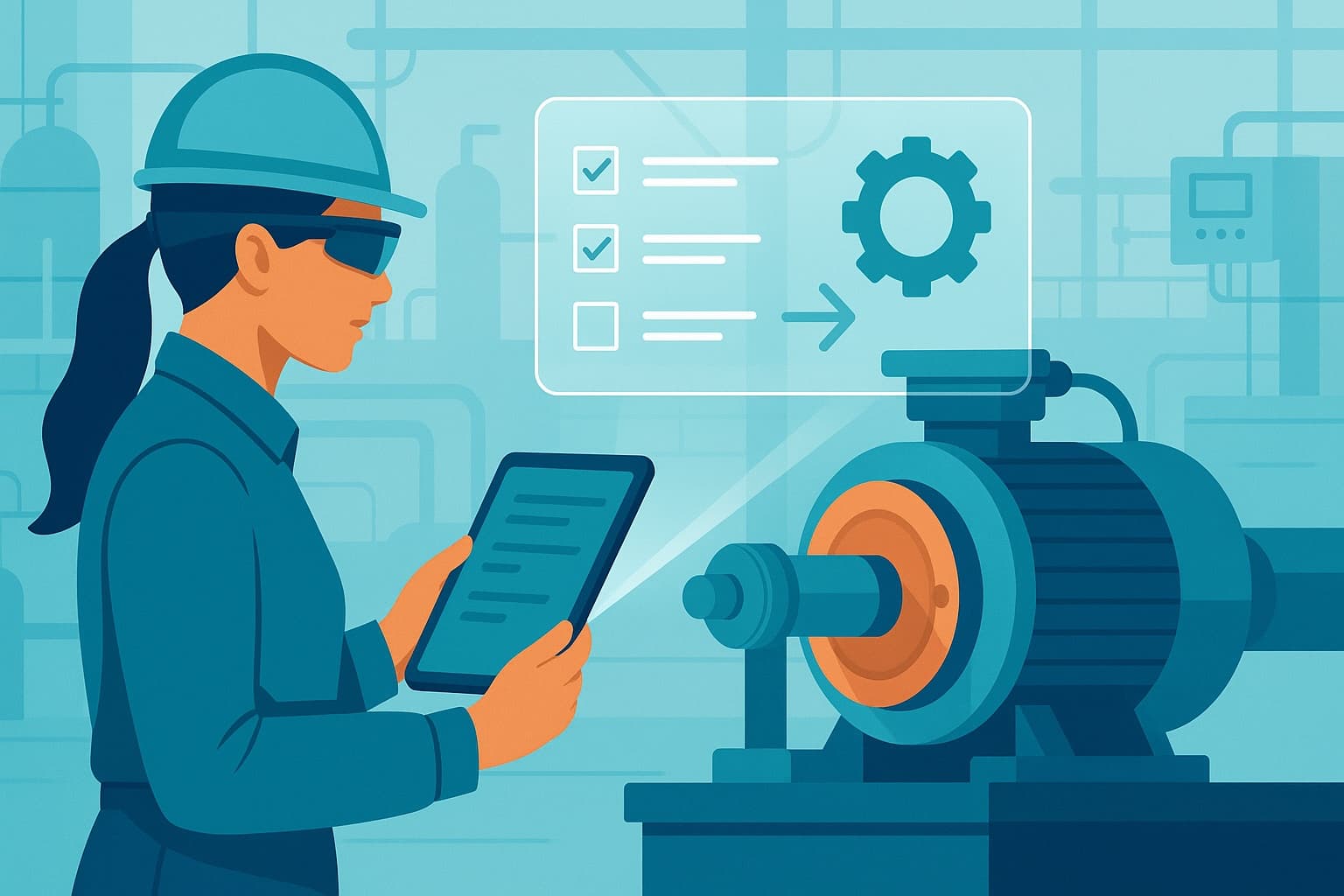
Consider a maintenance lead overseeing rotating equipment. With AI and AR–guided work instructions, technicians scan a QR code at the machine, instantly pulling up the latest SOP. AR overlays show where to inspect, what to check, and alert if steps are skipped. If a procedure changes, updates push automatically to all users. The result: less downtime, fewer errors, and a clear audit trail.
Building a digital library that teams trust and use
To create a digital library that drives real value, leaders must focus on adoption, governance, and continuous improvement—not just content digitisation.
Step 1: Map critical work and safety processes
Start by identifying the highest-impact procedures—those tied to safety, compliance, or frequent downtime. Prioritise:
- Lockout/tagout procedures
- Confined space entry
- Preventive maintenance tasks
- Changeover routines
- Emergency response protocols
Work with experienced technicians and HSE experts to capture tacit knowledge that often never makes it into manuals.
Step 2: Design for usability and accessibility
Content must be structured for fast access and field use. Best practices include:
- Use plain language and avoid jargon.
- Break instructions into clear, numbered steps.
- Add photos, diagrams, or AR cues to clarify actions.
- Tag procedures by equipment, location, risk level, and user role.
- Optimise for mobile and hands-free devices.
A 2022 Deloitte report highlights that digital work instructions improve first-time-right rates by up to 25% when designed for field usability.
Step 3: Enable rapid updates and strong governance
Outdated or conflicting instructions erode trust. Establish clear ownership for content review and approval:
- Assign process owners for each SOP or safety document.
- Use digital workflows for drafting, review, and publishing.
- Track version history and ensure only the latest instructions are accessible.
- Schedule regular audits to remove obsolete content.
Integrating with asset management or EHS platforms can automate triggers for instruction updates when equipment or regulations change.
Step 4: Close the feedback loop with teams
Encourage technicians and operators to report unclear steps, missing information, or improvement ideas. Digital libraries should:
- Allow in-context feedback submissions.
- Route suggestions to process owners for review.
- Share updates or clarifications with all users.
This not only improves content quality but also drives engagement and a sense of ownership.
Step 5: Measure usage and impact
Adoption is the true measure of success. Track key metrics such as:
- Frequency of instruction access by team, asset, or location.
- Completion rates for guided procedures.
- Time saved per task or reduction in errors.
- User feedback trends and action rates.
Regularly review these insights to target training, refine content, and demonstrate ROI to leadership.
Use cases: Where digital libraries deliver the most value
Digital libraries of work and safety instructions are proving their value across industrial sectors. Typical high-impact scenarios include:
Onboarding and upskilling new technicians
New hires can access step-by-step AR SOPs for routine tasks, reducing shadowing time and accelerating competency. For example, a process industry client reduced onboarding time by 30% by digitising core maintenance and safety instructions.
Reducing downtime in maintenance and troubleshooting
When equipment fails, every minute counts. With AI-powered search, technicians find relevant troubleshooting guides or repair steps instantly. AR overlays walk them through complex fixes, reducing reliance on memory or paper manuals.
Supporting compliance and audits
Digitally tracked SOP usage provides evidence for regulatory audits. Supervisors can verify that teams followed the latest procedures, with time-stamped records and version history.
Improving safety outcomes
Access to up-to-date lockout/tagout, confined space, and emergency response instructions reduces incident rates. In one manufacturing case, digital safety libraries cut reportable incidents by 18% over 12 months.
What ActARion brings: Proven expertise in industrial AR and AI
ActARion works with industrial leaders to build digital libraries of work and safety instructions that teams actually use. Our approach combines:
- Deep industrial process knowledge, including HSE, maintenance, and quality domains
- Advanced AI to recommend, personalise, and analyse instruction usage
- Augmented reality guidance for hands-free, step-by-step support in the field
- Robust governance workflows for content accuracy and compliance
- Integration with existing EHS, LMS, and asset management systems
We partner with operations, HSE, and training managers to map critical processes, design high-utility digital SOPs, and drive adoption across teams. The result: safer, more productive, and audit-ready operations.
Note: ActARion supports both initial library builds and optimisation of existing digital instruction platforms. Our methodology is proven in energy, manufacturing, utilities, and process industries.
Explore what this looks like in your organisation
If you want to see how a digital library of work and safety instructions can boost productivity, compliance, and safety in your environment, schedule a discovery call with ActARion. This session is exploratory and tailored to your processes—no commitment required.
Learn more about AI and AR–guided work instructions or see AR onboarding for technicians in action. For further reading, the National Safety Council's safety technology resources provide additional context on digital adoption in industry.
Go deeper
This article is part of our knowledge base on digital work instructions and compliance. For a comprehensive overview, read our whitepaper:
Digital work instructions and AR SOPs for standard work and compliance — Covers how to move from static documents to executable, verifiable work with AR SOPs.