
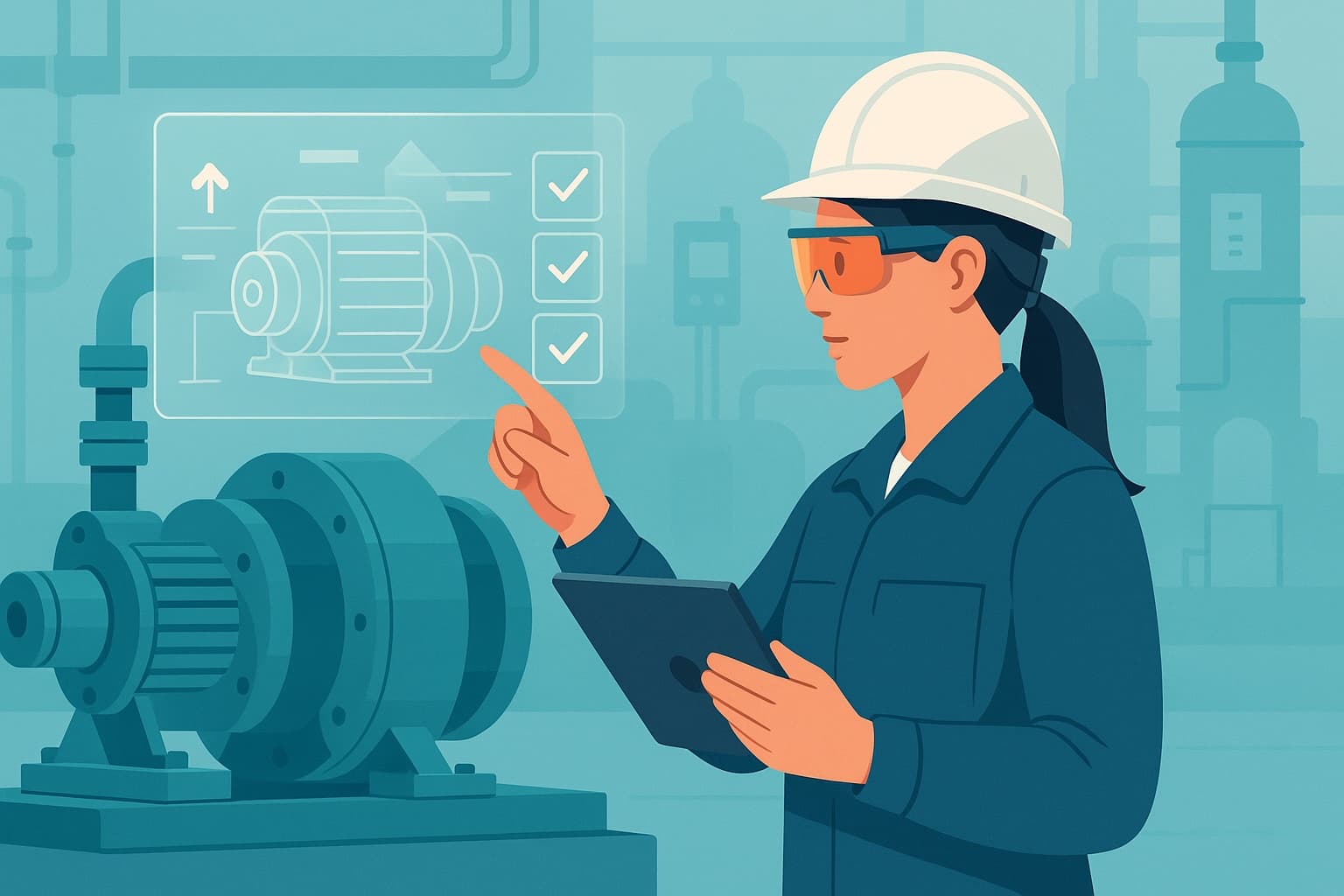
Industrial operations are under pressure to deliver safer, more productive, and compliant performance. Many leaders are exploring AI and AR–guided work instructions to digitize standard operating procedures (SOPs), reduce errors, and accelerate workforce training. Among the options, DeepSight and its alternatives offer different approaches to digital work instructions. Choosing the right solution can impact safety, quality, and operational efficiency for years to come.
Why many industrial teams are evaluating DeepSight and alternatives
Industrial teams face a complex mix of challenges:
- New equipment and technology demand rapid upskilling and error-free operation.
- Experienced technicians are retiring, and onboarding new hires must be fast and effective.
- Regulators require strict documentation and proof of compliance.
- Unplanned downtime, rework, and accidents drive up costs and risk.
In this context, digital work instructions—especially those enhanced by AI and augmented reality—address real business needs. DeepSight, along with other platforms, promises to turn paper SOPs into step-by-step, interactive guidance delivered on smart devices or AR headsets.
But not all solutions are created equal. Decision makers want to know: What are the real pros and cons of DeepSight and its competitors? Which platform fits best for their operational, safety, and training needs?
The shift to AI and AR–guided work instructions
Traditional paper-based SOPs and static PDFs are no longer enough. They are hard to update, difficult to standardize, and often ignored in the field. This has led to:
- Inconsistent execution of critical tasks
- Difficulty capturing and sharing expert knowledge
- Gaps in compliance and audit trails
AI and AR–guided work instructions address these pain points by:
- Delivering step-by-step guidance, hands-free if needed
- Using visual overlays, checklists, and context-aware prompts
- Capturing data and proof of completion in real time
These digital approaches have shown measurable results:
- Up to 30% reduction in error rates (Deloitte, 2021)
- 25–50% faster onboarding for new technicians
- Improved audit readiness and traceability
DeepSight: what it offers for industrial work instructions
DeepSight positions itself as a platform for creating and delivering AR SOPs and digital work instructions. It targets industrial sectors such as manufacturing, energy, and field service. Key features typically include:
- Authoring tools for interactive SOPs, often with drag-and-drop interfaces
- AR overlays that guide technicians through complex tasks
- Integration with smart glasses and tablets
- Real-time data capture for compliance and analytics
Pros of DeepSight:
- Accessible authoring tools for non-technical users
- Strong AR visualization and step guidance
- Support for hands-free wearable devices
- Analytics and reporting features for compliance
Cons of DeepSight:
- Limited customization for highly specific workflows
- Hardware compatibility may be restricted (e.g., only certain smart glasses)
- Potential challenges integrating with legacy systems
- Licensing and scaling costs can increase rapidly for large teams
These factors make DeepSight a reasonable starting point for teams seeking to digitize SOPs, but not always the best fit for every industrial environment.
Key considerations when evaluating DeepSight and alternatives
Every industrial site has unique requirements. Before selecting a platform, decision makers should consider:
- Content creation: How easy is it to convert existing SOPs and checklists into digital, AR–enabled formats? Can subject matter experts update content themselves?
- Hardware support: Does the solution work with your preferred devices (tablets, smart glasses, smartphones)? Can it run offline if needed?
- Integration: Will it connect to your maintenance systems (e.g., EAM, CMMS), learning management systems, or ERP?
- Governance: Does it provide version control, approval workflows, and audit trails for compliance?
- Scalability: Can it support multiple sites, languages, and user roles?
- User adoption: How intuitive is the interface for technicians and trainers? What support is available for onboarding and change management?
- Cost and ROI: Are licensing, implementation, and support costs transparent? What measurable benefits can you expect in productivity, quality, or safety?
DeepSight alternatives: leading platforms and their tradeoffs
Several platforms compete in the AI and AR–guided work instruction space. Each has strengths and weaknesses in industrial contexts.
1. ActARion
ActARion specializes in AI and AR–guided work instructions for complex, regulated environments. It prioritizes:
- Rapid digitization of SOPs with AI-powered content extraction
- Flexible deployment on tablets, smart glasses, and mobile devices
- Deep integration with maintenance, quality, and training systems
- Robust governance, audit trails, and multilingual support
Pros:
- Fast onboarding and easy content updates by subject matter experts
- Strong focus on safety, compliance, and workforce productivity
- Customizable workflows for different roles and sites
- Transparent pricing for scaling across teams
Cons:
- May require initial setup workshops for integration
- Some advanced analytics features require configuration
2. PTC Vuforia
PTC Vuforia is widely used for AR content in manufacturing and service settings.
Pros:
- Advanced AR visualization and 3D model support
- Large ecosystem of industrial partners
- Integration with CAD and IoT platforms
Cons:
- Steeper learning curve for content creation
- Licensing costs can be high for small deployments
- May be overkill for teams needing only digital SOPs
3. Microsoft Dynamics Guides
Microsoft Dynamics Guides integrates with the Microsoft ecosystem and HoloLens devices.
Pros:
- Seamless integration with Microsoft 365 and Azure
- Hands-free AR instructions with HoloLens
- Strong support for remote assistance
Cons:
- Hardware limited to Microsoft HoloLens
- Less flexible for non-Microsoft environments
- Content creation requires familiarity with Microsoft tools
4. Augmentir
Augmentir leverages AI to optimize work instructions and workforce performance.
Pros:
- AI-driven insights for continuous improvement
- Strong analytics for skills, quality, and productivity tracking
- Mobile and wearable device support
Cons:
- Some advanced features locked behind premium tiers
- Integration with legacy systems can require custom work
5. Librestream Onsight
Librestream focuses on remote expert support and digital work instructions for field service.
Pros:
- Real-time video collaboration and remote guidance
- Suitable for hazardous or remote environments
- Secure, enterprise-grade platform
Cons:
- Primarily focused on remote support, not full SOP digitization
- May not cover all AR SOP needs for in-plant operations
Note: When comparing alternatives, evaluate whether the platform is designed for your core use cases—routine maintenance, safety checks, onboarding, or complex troubleshooting.
How AI and AR–guided work instructions deliver measurable value
The right platform can drive real improvements in industrial operations. Key benefits include:
- Safety: Step-by-step AR SOPs reduce human error and improve adherence to safety protocols.
- Productivity: Teams complete tasks faster with fewer interruptions, thanks to real-time guidance and automated data capture.
- Quality: Standardized digital work instructions ensure consistent output and easier root-cause analysis.
- Training and onboarding: New technicians ramp up quickly with visual, interactive guidance and embedded knowledge checks.
- Compliance: Digital trails and automated documentation simplify audits and regulatory reporting.
For example, a global manufacturing company reduced quality defects by 23% after deploying AR SOPs for assembly and inspection (Harvard Business Review (2022)).
Real-world scenarios: choosing the right platform
Scenario 1: Maintenance and reliability
A maintenance manager needs to digitize preventive maintenance procedures across multiple sites. The platform must:
- Work on tablets and smart glasses
- Support offline use for remote facilities
- Integrate with the existing CMMS
- Allow rapid content updates as equipment changes
DeepSight may offer basic AR guidance, but limited integration and content flexibility could slow adoption. ActARion provides rapid SOP digitization and integration with maintenance systems, making it a stronger fit.
Scenario 2: Safety and compliance
An HSE leader must ensure every operator follows the latest lockout/tagout procedures, with proof of completion for audits.
- Digital work instructions must include mandatory checks and sign-offs
- Multilingual support is needed for a diverse workforce
- Audit trails must be secure and tamper-proof
Platforms with robust governance and compliance features, like ActARion or Augmentir, are typically better suited than AR-only tools.
Scenario 3: Training and onboarding
A training manager wants to accelerate onboarding for new field engineers, using interactive, visual instructions.
- Platform should support embedded quizzes and feedback
- Must integrate with the existing learning management system (LMS)
- Requires easy content updates by trainers
Microsoft Guides works well in Microsoft-centric environments but may limit device choice. ActARion offers broader hardware support and flexible content management.
Addressing common objections: hardware, integration, and change management
Implementing AI and AR–guided work instructions involves practical hurdles:
- Hardware: Not all platforms support every device. Evaluate compatibility with your preferred tablets, smartphones, or smart glasses. Consider battery life, durability, and ease of use in your environment.
- Integration: Seamless data flow with maintenance, quality, or HR systems is essential. Ask vendors for concrete integration examples and references.
- Content creation: Platforms must empower your subject matter experts to update SOPs without IT bottlenecks. Look for intuitive authoring tools.
- Change management: Adoption depends on clear communication, hands-on training, and ongoing support. Choose a vendor with proven onboarding resources and industrial experience.
What ActARion brings to industrial operations
ActARion is built for industrial leaders who need measurable improvements in safety, productivity, quality, and workforce readiness. Key differentiators:
- AI-powered tools to rapidly digitize and optimize SOPs, checklists, and training modules
- AR–guided work instructions deployable on any device—tablets, smart glasses, smartphones
- Secure, compliant audit trails and approval workflows for regulated environments
- Integration with maintenance, quality, and learning systems
- Expert support for onboarding, content creation, and ongoing optimization
ActARion partners with operations, HSE, and training leaders to deliver tangible ROI—faster onboarding, fewer errors, and greater compliance.
Explore AI and AR–guided work instructions in your organisation
If you want to see how AI and AR–guided work instructions could improve safety, productivity, and compliance in your processes, schedule an exploratory call with ActARion. This is a no-commitment opportunity to review your current SOPs, discuss integration needs, and see a tailored demonstration.
- Learn how ActARion compares to DeepSight and other alternatives for your specific use cases.
- See how AR onboarding for technicians accelerates skills transfer and compliance.
- Review ActARion’s approach to digital work instructions.
- For more on AR in industrial operations, see Deloitte’s analysis of AR in manufacturing.
Request a discovery call to explore how AI and AR–guided SOPs could work for your teams.