
Why AR-guided work instructions matter in industry today
Industrial operations face constant pressure to increase productivity, maintain safety, and ensure compliance—all while dealing with workforce turnover and tightening regulations. Traditional paper-based SOPs and training manuals are slow to update, hard to enforce, and often ignored under time pressure. This leads to inconsistent execution, avoidable errors, and higher risk.
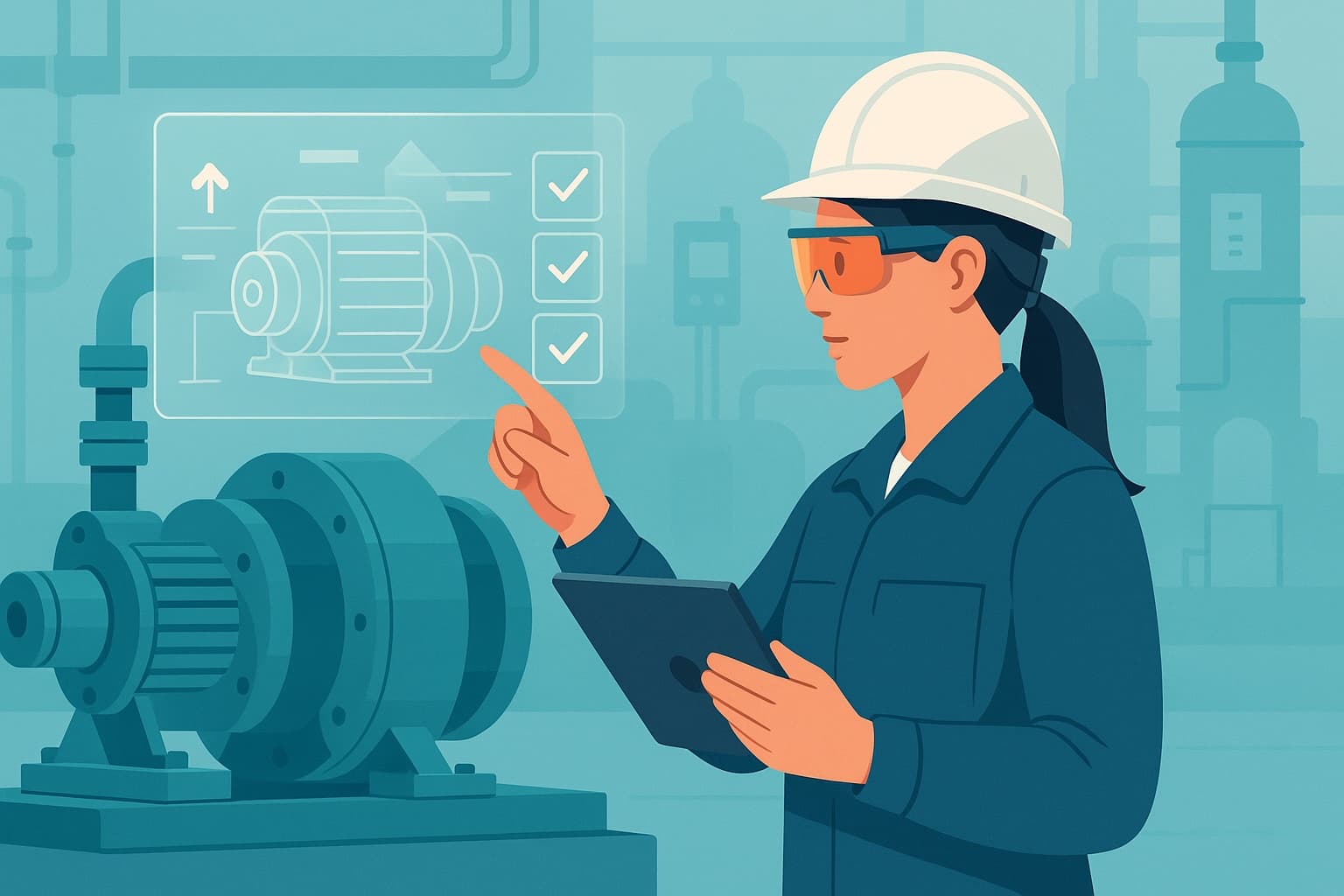
AR-guided work instructions—delivered via smart glasses, tablets, or mobile devices—offer a practical solution. These systems overlay digital step-by-step instructions, checklists, and real-time guidance on the physical work environment. The result: technicians, operators, and field engineers work more consistently, safely, and efficiently.
Platforms like DeepSight have gained attention for their AR SOPs, but they are not the only option. Understanding the strengths and trade-offs of DeepSight and alternatives is key for operations managers, maintenance leads, HSE professionals, and L&D teams tasked with justifying technology investments.
The challenge: outdated work instructions and knowledge gaps
Many industrial companies still rely on static documents, aging PDFs, or tribal knowledge for critical tasks:
- Maintenance teams struggle with incomplete or out-of-date procedures.
- New technicians face a steep learning curve and inconsistent training.
- Operations managers lack visibility into SOP compliance.
- HSE leaders worry about procedural drift and unreported near misses.
These gaps contribute to downtime, quality escapes, and safety incidents. The cost is measurable: according to the International Society of Automation, human error accounts for up to 80% of industrial incidents (ISA, 2022).
Modernizing work instructions with AI and AR is no longer optional. The question is which platform fits your environment, workforce, and governance needs.
Why companies are investing in AR SOPs and digital work instructions now
Several trends are converging:
- Aging workforce and skills gap: As experienced technicians retire, organizations must accelerate onboarding and upskilling.
- Complexity of assets: Equipment and process complexity is increasing, making "on the job" learning riskier.
- Regulatory pressure: Regulators expect traceable, up-to-date SOPs and proof of compliance.
- Remote support needs: Field teams need instant access to expertise without waiting for a specialist to travel.
- Digital transformation mandates: Leadership is pushing for measurable ROI from digital initiatives that impact safety, quality, and uptime.
AR-guided work instructions directly address these priorities. They reduce error rates, standardize execution, and shorten ramp-up times for new staff.
What DeepSight offers: core features and limitations
DeepSight is a recognized provider of AR SOPs and digital work instructions. Its platform enables companies to:
- Author step-by-step instructions with images, video, and 3D models.
- Deliver these instructions via smart glasses or mobile devices, hands-free.
- Collect execution data for compliance and process improvement.
- Integrate with enterprise asset management (EAM) and learning management systems (LMS).
Strengths of DeepSight:
- User-friendly authoring tools for creating visual SOPs.
- Good support for common hardware (e.g., RealWear, HoloLens).
- Proven deployments in manufacturing, energy, and utilities.
- Analytics for tracking procedure completion and bottlenecks.
Limitations and challenges:
- Content creation and maintenance still require dedicated effort—converting legacy SOPs to digital is not automatic.
- Hardware compatibility is good, but not universal; some legacy devices may not be supported.
- Integration with highly customized EAM or MES systems can require extra services.
- Change management is critical—teams need training and buy-in to ensure adoption.
- Licensing and scaling costs can become significant as more users and sites come online.
DeepSight is a credible solution, but every industrial environment has unique requirements. Decision makers should consider alternative platforms and weigh the pros and cons for their specific context.
Alternatives to DeepSight: comparing leading AR-guided work instruction platforms
Several vendors offer AR-guided work instruction solutions, each with their own approach. When evaluating DeepSight and alternatives, focus on these criteria:
- Ease of content creation: How quickly can you digitize existing SOPs? Is AI-assisted authoring available?
- Hardware flexibility: Does the platform support your preferred devices (smart glasses, tablets, smartphones)?
- Integration: Can it connect to your EAM, CMMS, LMS, or ERP systems?
- Analytics and compliance: Does it provide actionable data for audits, quality, and process improvement?
- User experience: Is the interface intuitive for technicians and operators in real-world conditions?
- Support and scalability: Can the vendor support multi-site rollouts and ongoing change management?
Below is a summary of how DeepSight compares to several leading alternatives:
PTC Vuforia
- Strengths: Robust AR capabilities, strong 3D model support, integration with enterprise systems, mature analytics.
- Limitations: Higher complexity and cost, steeper learning curve for content creation, best suited for large enterprises.
Microsoft Dynamics 365 Guides
- Strengths: Seamless integration with Microsoft ecosystem (Teams, Azure), good HoloLens support, enterprise-grade security.
- Limitations: Limited hardware flexibility (focus on HoloLens), less suited for environments that require ruggedized devices.
Augmentir
- Strengths: AI-powered authoring, strong mobile support, real-time guidance and skills tracking, good for mixed device fleets.
- Limitations: May lack deep integration with complex legacy systems, content migration from existing formats can be challenging.
WorkLink by Scope AR
- Strengths: Interactive 3D AR instructions, easy updates to procedures, strong support for training and remote assistance.
- Limitations: 3D content creation may require additional resources or expertise, pricing can be a barrier for smaller teams.
ActARion
- Strengths: Designed for industrial teams seeking measurable safety, quality, and productivity gains. Flexible device support, rapid deployment, and strong focus on change management and governance. Proven experience in high-stakes environments (energy, utilities, manufacturing).
- Limitations: As with all AR SOP platforms, initial investment in content creation and team training is required. Success depends on leadership commitment and clear KPIs.
For a detailed feature comparison, see our explainer on AR SOPs for industrial teams.
Real-world impact: use cases and results from AR-guided work instructions
Decision makers want proof. The following scenarios illustrate how AR-guided work instructions, whether through DeepSight or alternatives, deliver value:
Faster onboarding and skills transfer
A global chemicals manufacturer reduced technician onboarding time by 40% by digitizing SOPs and delivering AR-guided work instructions on tablets. New hires followed step-by-step procedures with visuals and checklists, reducing errors and rework.
Improved maintenance quality and safety
A power generation company equipped maintenance teams with smart glasses running AR SOPs. Technicians accessed real-time instructions and checklists, ensuring every step was completed in sequence. The result: a 25% drop in maintenance-related safety incidents and faster mean time to repair.
Consistent compliance in regulated environments
A medical device manufacturer used AR-guided work instructions to ensure assembly teams followed validated procedures. Execution data was logged automatically, supporting audit readiness and reducing paperwork.
Remote support and troubleshooting
Field engineers in oil and gas used AR platforms to connect with remote experts during complex repairs. The platform overlaid live annotations and step guidance, reducing downtime and avoiding costly travel.
These outcomes are achievable with DeepSight and comparable platforms, provided there is clear alignment with operational priorities and a structured rollout.
Key considerations when selecting an AR-guided work instruction platform
Choosing between DeepSight and alternatives is not just a technical decision. Key factors include:
- Alignment with operational goals: Does the solution directly address your safety, quality, uptime, and training objectives?
- Governance and change management: Is there a plan for content upkeep, user adoption, and continuous improvement?
- Scalability and support: Can the platform handle multi-site, multi-language deployments with reliable vendor support?
- Data privacy and security: Does it meet your IT and regulatory requirements for data handling and integration?
- Total cost of ownership: Have you accounted for hardware, software, content creation, training, and ongoing support?
For a deeper dive, see our FAQ on digital work instructions.
What ActARion brings to industrial teams
ActARion specializes in helping industrial organizations digitize and deploy AI and AR–guided work instructions efficiently and safely. Our approach is rooted in operational reality:
- Rapid content digitization: We help you convert existing SOPs into digital, AR-ready formats using AI-assisted tools.
- Device flexibility: Support for smart glasses, tablets, and smartphones—whatever fits your environment.
- Integration expertise: Seamless connection to your EAM, CMMS, and LMS for data-driven compliance.
- Change management support: Training, governance frameworks, and KPIs to ensure adoption and measurable ROI.
- Proven industrial experience: Track record in energy, utilities, manufacturing, and other regulated sectors.
ActARion does not just deploy technology—we partner with your teams to ensure smarter, safer, and faster work on the ground.
Explore this in your organisation
If you want to see how AR-guided work instructions—whether with DeepSight or alternatives—can drive safety, compliance, and performance in your operations, schedule an exploratory call with ActARion. There is no commitment, just a practical look at what fits your processes and teams.
- Schedule a discovery call
- Read more about AI and AR–guided onboarding for new technicians
- Learn about digital work instructions for regulated industries
- For a broader perspective on AR in industry, see the IDC MarketScape for AR platforms (external link)
Go deeper
This article is part of our knowledge base on connected worker solutions. For a comprehensive overview, read our whitepaper:
Connected worker platforms: enabling knowledge transfer and operational support — Learn what defines a connected worker platform and what to look for when evaluating solutions.