
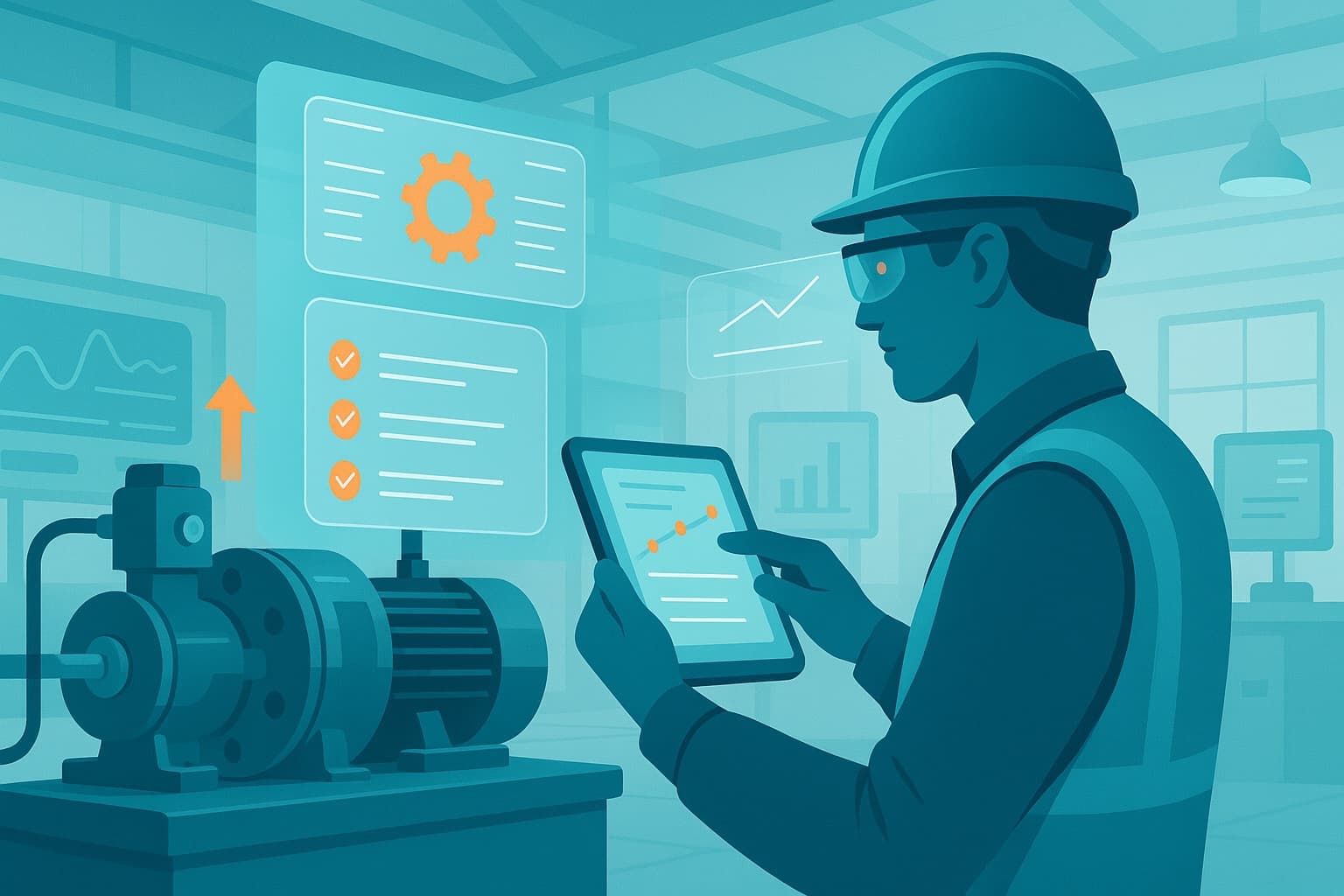
Data from AR-guided work instructions is transforming how industrial leaders manage productivity, safety, and training. With the right analytics, operations managers, HSE leads, and maintenance teams can pinpoint inefficiencies, verify compliance, and continuously improve processes. But what data should you measure, and how do you turn it into actionable insight?
Why data from AR instructions matters now
Industrial businesses face increasing pressure to maximize uptime, ensure regulatory compliance, and reduce incidents—all while managing a workforce with varying skills and experience. Traditional work instructions, whether paper-based or static digital files, rarely provide feedback on how tasks are performed in the field. This makes it hard to identify where procedures break down or where additional training is needed.
AI and AR–guided work instructions change this dynamic. Every step, confirmation, and user interaction can be logged and analyzed. This provides a new layer of operational visibility, making it possible to:
- Identify bottlenecks and deviations in real time
- Verify that SOPs are followed as intended
- Detect knowledge gaps before they lead to incidents
- Optimize training and onboarding for new technicians
These capabilities are especially relevant as industrial companies respond to workforce turnover, stricter regulatory scrutiny, and the need for continuous improvement. According to McKinsey, data-driven operations can increase productivity in manufacturing environments by up to 30% (). AR SOPs and digital work instructions are a key enabler for this shift.
What to measure: key metrics from AR work instructions
Not every metric is equally valuable. The most effective analytics focus on operational performance, compliance, safety, and workforce development. Here are the main categories decision makers should track:
1. Task completion and cycle time
- Step-by-step duration: Time spent on each instruction step, highlighting bottlenecks.
- Total process time: End-to-end duration for critical procedures.
- Time variance: Comparison across shifts, teams, or locations.
Why it matters: Consistent delays often indicate unclear instructions, equipment issues, or skill gaps.
2. Compliance and deviation tracking
- Step confirmations: Whether each step was completed and acknowledged.
- Skipped steps: Frequency and context for omitted actions.
- Deviation logs: Manual entries or flagged deviations from SOPs.
Why it matters: Skipped or rushed steps are a leading cause of safety incidents and quality escapes.
3. Error and incident capture
- Error reporting: In-app or voice-logged errors, near-misses, or issues.
- Photo/video evidence: Media captured for abnormal conditions or defects.
- Incident correlation: Linking errors to specific SOP steps or user actions.
Why it matters: Pinpointing the source of recurring errors supports targeted corrective actions.
4. User engagement and learning
- First-time right rates: Percentage of tasks completed without assistance.
- Help requests: How often users access help or request support.
- Knowledge checks: Results from in-line quizzes or verification steps.
Why it matters: High support requests or low first-time right rates indicate areas for further training.
5. Equipment and asset data integration
- Asset condition records: Data collected via AR prompts (e.g., readings, photos).
- Sensor integration: Linking IoT data with SOP progress.
- Maintenance triggers: Automated alerts based on inspection findings.
Why it matters: Early identification of asset issues improves uptime and reduces unplanned outages.
How AI and AR–guided instructions collect actionable data
The value of AR instructions goes beyond replacing paper checklists with digital screens. AI and AR platforms like ActARion enable real-time data capture and analysis at the point of work. Here’s how this works in practice:
Seamless data logging
Every interaction with AR SOPs—step confirmations, media capture, voice notes, and help requests—is automatically logged. This creates a granular activity record for every procedure, user, and asset.
Contextual analytics
AI algorithms can flag deviations, compare performance across teams, and identify outliers. For example, if a particular maintenance step takes 40% longer on night shift versus day shift, the system highlights this variance for review.
Integration with other systems
Data from AR instructions can be pushed to CMMS, EHS, or training management systems. This closes the loop between field activity, asset management, and skills development.
Real-time feedback
Supervisors can monitor live progress and intervene if a critical SOP is not followed. Teams receive instant feedback when deviations occur, supporting a culture of continuous improvement.
Use cases: how industrial leaders apply AR analytics
Leading manufacturers, utilities, and energy companies use data from AR SOPs to solve specific operational challenges. Here are concrete examples:
Reducing maintenance downtime
A global chemical company equipped field engineers with AR-guided maintenance procedures for critical pumps. By analyzing step duration and skipped steps, the maintenance manager identified that filter changes were often bypassed to save time on night shift. Targeted coaching and SOP adjustments led to a 15% reduction in unplanned pump failures.
Improving safety compliance
An energy utility deployed AI and AR–guided work instructions for high-voltage switching. Data analysis showed that certain PPE checks were skipped more frequently at remote substations. The company introduced additional in-line verification steps and real-time supervisor alerts, resulting in a measurable drop in near-miss incidents.
Accelerating technician onboarding
A machine builder used digital work instructions with embedded knowledge checks during onboarding. By tracking first-time right rates and help requests, the L&D team identified which procedures needed clearer explanations. This shortened onboarding time for new technicians by 30% while improving confidence and retention.
Optimizing quality assurance
A food processing plant used AR SOPs for line changeovers. Analytics revealed that certain steps were often misinterpreted, leading to cross-contamination risks. The quality team revised the instructions and added photo confirmation steps, reducing product quality escapes and improving audit readiness.
Turning data into action: best practices for decision makers
Collecting data is only valuable if it leads to better decisions and outcomes. For operations, HSE, and training leaders, this means embedding analytics into daily management routines. Here are proven practices:
- Set clear KPIs: Define what “good” looks like for cycle time, compliance, and training effectiveness.
- Review dashboards regularly: Monitor for trends, outliers, and recurring issues.
- Share insights with teams: Use data to drive coaching, not blame.
- Close the loop: Update SOPs and training materials based on actual field data, not assumptions.
- Prioritize change management: Involve operators, field engineers, and supervisors in defining which metrics matter.
Note: Data privacy and security are critical. Ensure that all analytics comply with company policies and relevant regulations (such as GDPR). Data should be used to support teams, not as a punitive measure.
Overcoming common challenges: hardware, adoption, and integration
Industrial leaders often raise valid concerns when adopting AR instructions and analytics:
- Hardware readiness: Modern AR platforms support a range of devices, from tablets to headsets. Choose hardware that fits your environment and workflows. Pilot with a small group before scaling.
- User adoption: Involve technicians and operators early. Demonstrate how data helps them, not just management. Provide quick reference guides and hands-on training.
- Content creation: Start with high-impact SOPs. Use templates and modular content to accelerate authoring.
- System integration: Work with IT and OT teams to connect AR data with existing CMMS, EHS, or ERP systems. Use standard APIs where possible to reduce complexity.
ActARion provides guidance on hardware selection, change management, and integration to help industrial businesses maximize the benefits of AI and AR–guided work instructions.
What ActARion brings to data-driven AR SOPs
ActARion partners with industrial leaders to implement AI and AR–guided work instructions that deliver measurable results. Our platform is designed for:
- Configurable analytics: Tailor dashboards to your KPIs, whether for safety, quality, or productivity.
- End-to-end visibility: Track every step, confirmation, and deviation—linked to teams, assets, and locations.
- Seamless integration: Connect AR data with your CMMS, EHS, and training management systems.
- Change management support: Practical playbooks for adoption, governance, and continuous improvement.
- Security and compliance: Robust controls to ensure data privacy and regulatory alignment.
With ActARion, operations managers, HSE leads, and L&D professionals can move beyond guesswork and manual audits. You gain actionable insight to drive safer, smarter, and faster work—every day.
Explore data-driven AR instructions in your organisation
Discover how data and analytics from AR work instructions can improve safety, productivity, and workforce development in your operations. Schedule an exploratory call with ActARion—no commitment required—to see what this could look like for your team.
- Learn more about AI and AR–guided work instructions
- Explore digital SOPs for safety-critical industries
- For an external perspective on industrial analytics, see McKinsey: The potential for AI in industrial operations
Ready to see where your data can take you? Request a discovery session with ActARion’s experts.