
Modern industrial equipment generates vast amounts of data—vibration levels, temperatures, pressures, cycle counts, error codes. This sensor data holds valuable insights about equipment health. But too often, it remains disconnected from the technicians who perform maintenance.
Connecting sensor data to AR-guided maintenance steps bridges this gap. Technicians see real-time equipment data in context, enabling smarter decisions, targeted interventions and a path toward predictive maintenance.
The disconnect between data and execution
Many organisations collect sensor data but struggle to make it actionable:
- Data in silos: Sensor data lives in SCADA, historian or IoT platforms, separate from maintenance systems
- Limited technician access: Technicians may not have easy access to relevant data during maintenance tasks
- Interpretation challenges: Raw data requires analysis to be meaningful—technicians need insights, not numbers
- Reactive use: Data is often reviewed after failures, not used proactively during maintenance
This disconnect means valuable data is underutilised, and maintenance remains largely reactive.
How AR integrates sensor data into maintenance
AR-guided maintenance can bridge the gap between sensor data and execution:
Real-time data display
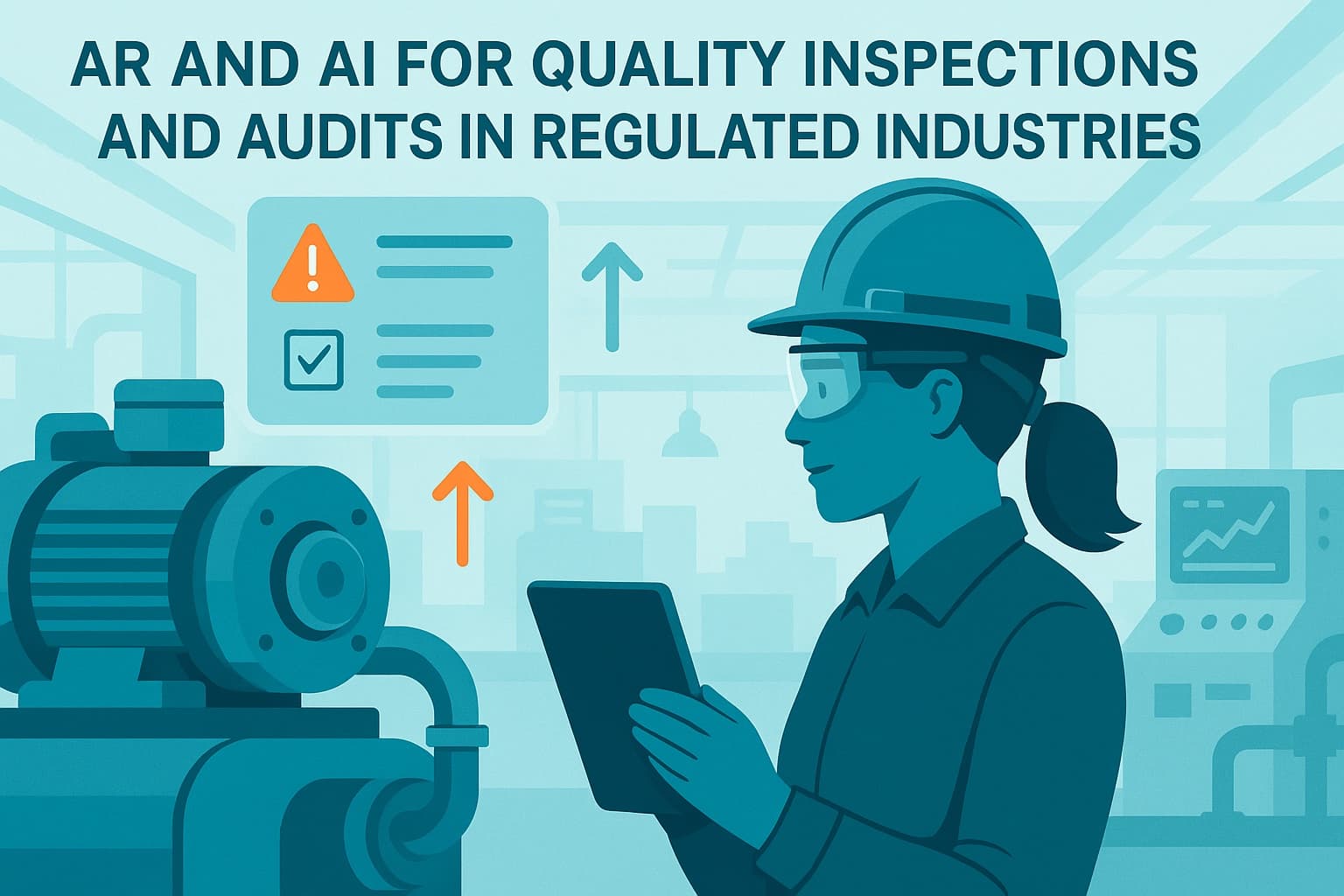
AR work instructions can display live sensor readings in the technician's field of view—temperature, pressure, vibration—overlaid on the actual equipment. Technicians see the data in context, without switching between screens.
Condition-based prompts
AR systems can use sensor data to guide maintenance dynamically. For example:
- If vibration exceeds a threshold, prompt additional inspection steps
- If temperature is within range, skip a check that is not needed
- If cycle count reaches a milestone, trigger a specific maintenance task
Automatic data logging
Sensor readings can be captured automatically as part of the maintenance record—no manual entry required. This creates a rich data set linking maintenance activities to equipment condition.
Anomaly alerts
If sensors detect unusual conditions during maintenance, the AR system can alert the technician immediately. This enables real-time response to emerging issues.
The path to predictive maintenance
Connecting sensor data to AR-guided maintenance is a stepping stone toward predictive maintenance:
Build a linked data set
Each maintenance task creates a record that combines execution data (what the technician did) with condition data (what the sensors reported). Over time, this builds a rich data set for analysis.
Identify patterns
Analytics can reveal patterns—correlations between sensor readings and maintenance outcomes, early warning signs of failure, optimal maintenance intervals.
Trigger maintenance proactively
As patterns become clear, maintenance can shift from time-based schedules to condition-based triggers. Work orders are generated when data indicates maintenance is needed—not on a fixed calendar.
Continuous improvement
The feedback loop continues. Maintenance outcomes inform sensor thresholds. Sensor data refines maintenance procedures. The system gets smarter over time.
Real-world example: pump monitoring in manufacturing
A manufacturing plant installed vibration sensors on critical pumps. Data was collected but rarely reviewed until after failures.
By integrating sensor data with AR-guided maintenance:
- Technicians saw live vibration data during inspections
- AR prompts guided additional checks when vibration exceeded thresholds
- Sensor readings were logged automatically with each maintenance task
Results after one year:
- Early detection of bearing wear increased by 60%
- Unplanned pump failures dropped by 40%
- Maintenance intervals were optimised based on actual condition data
Keys to success
To connect sensor data effectively to AR-guided maintenance:
- Start with high-value assets: Focus on equipment where sensor data and condition-based maintenance will have the greatest impact
- Define meaningful thresholds: Work with reliability engineers to set thresholds that trigger appropriate actions
- Make data accessible: Ensure the AR platform can access relevant sensor data in real time
- Train technicians: Help technicians understand what the data means and how to respond
Getting started
If your organisation collects sensor data but struggles to make it actionable, connecting it to AR-guided maintenance can help. Start with a pilot on high-value assets, integrate relevant data streams and build from there.
Learn more about AR preventive maintenance with data-driven insights or contact ActARion to discuss your sensor integration goals.