
In industrial environments, getting new hires up to speed quickly is both a challenge and a competitive advantage. Every week a new operator spends learning is a week of reduced output, higher error risk and increased burden on trainers. Traditional onboarding methods—shadowing, classroom training, PDF manuals—are slow, inconsistent and hard to scale.
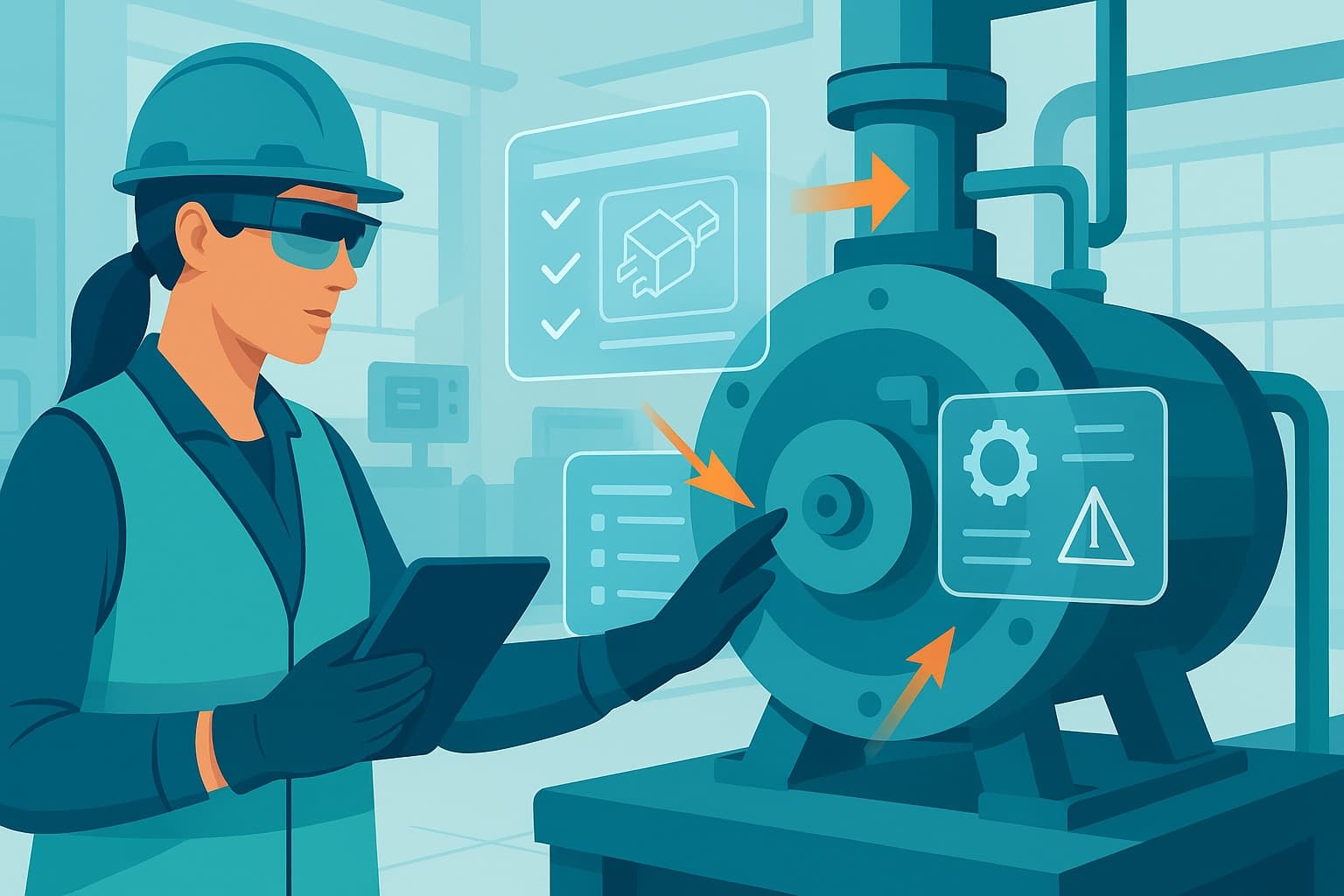
AR-guided onboarding offers a faster, more effective path. By putting step-by-step visual guidance directly in front of new hires as they work, AR work instructions accelerate learning, reduce errors and help new employees contribute sooner.
Why traditional onboarding is slow
Traditional onboarding has inherent limitations:
- Passive learning: Classroom sessions and reading manuals are passive. Information is presented, but retention is low.
- Trainer dependency: Shadowing requires an experienced employee to be available, willing and skilled at teaching—a triple constraint that rarely aligns.
- Context gap: Learning in a classroom or from a document does not transfer easily to the real work environment.
- Variable quality: Training quality depends on who is training, when and where. Consistency is hard to achieve.
These limitations mean new hires often take weeks or months to reach full productivity, with significant error rates along the way.
How AR onboarding accelerates learning
AR-guided onboarding addresses these challenges directly:
Learning by doing
AR work instructions guide new hires through real tasks, step by step. They learn by doing, not by watching or reading. This hands-on approach improves retention and builds confidence faster.
Always-available guidance
AR guidance is available on demand—no need to wait for a trainer. New hires can practice independently, accelerating their learning curve.
Contextual, visual instruction
AR overlays are displayed on the actual equipment or workspace. Instructions are immediately relevant and easy to follow, eliminating the context gap.
Consistent experience
Every new hire receives the same high-quality instruction, regardless of trainer availability or shift. This ensures consistent skill development across the organisation.
Immediate feedback
AR systems can detect errors and provide real-time feedback, helping new hires correct mistakes before they become habits.
The business impact of faster onboarding
Accelerating time to productivity delivers real business value:
- More output, sooner: New hires contribute productive work earlier, increasing capacity and throughput.
- Fewer errors during learning: AR guidance reduces errors during the onboarding phase, cutting rework and waste.
- Lower trainer burden: Trainers can focus on complex scenarios and exceptions, rather than routine procedural instruction.
- Better retention: New hires who feel supported and confident are more likely to stay, reducing turnover costs.
Real-world example: logistics onboarding
A logistics company piloted AR-guided onboarding for new warehouse operators. Previously, new hires spent two weeks shadowing before working independently, with ongoing coaching for several more weeks.
With AR work instructions:
- New hires began independent work after one week
- Error rates during onboarding dropped by 50%
- Trainer time per new hire fell by 60%
- New hire satisfaction scores improved significantly
The company expanded AR onboarding across all distribution centres, cutting time to productivity by over 40% organisation-wide.
Best practices for AR onboarding
To maximise the impact of AR-guided onboarding, consider these best practices:
- Start with high-impact tasks: Focus first on the tasks new hires must learn early and where errors are most costly.
- Combine AR with human coaching: AR handles routine procedural guidance; trainers focus on complex skills, exceptions and culture.
- Gather feedback: Ask new hires what works and what does not. Use their input to improve AR content.
- Track metrics: Measure time to competency, error rates and trainer workload. Use data to demonstrate ROI and refine the programme.
Getting started
If your organisation struggles with slow onboarding or high new-hire error rates, AR-guided training is worth exploring. Start with a focused pilot on a specific role or task, measure results and build from there.
Learn more about AR training and onboarding for industrial teams or contact ActARion to discuss your onboarding challenges.