
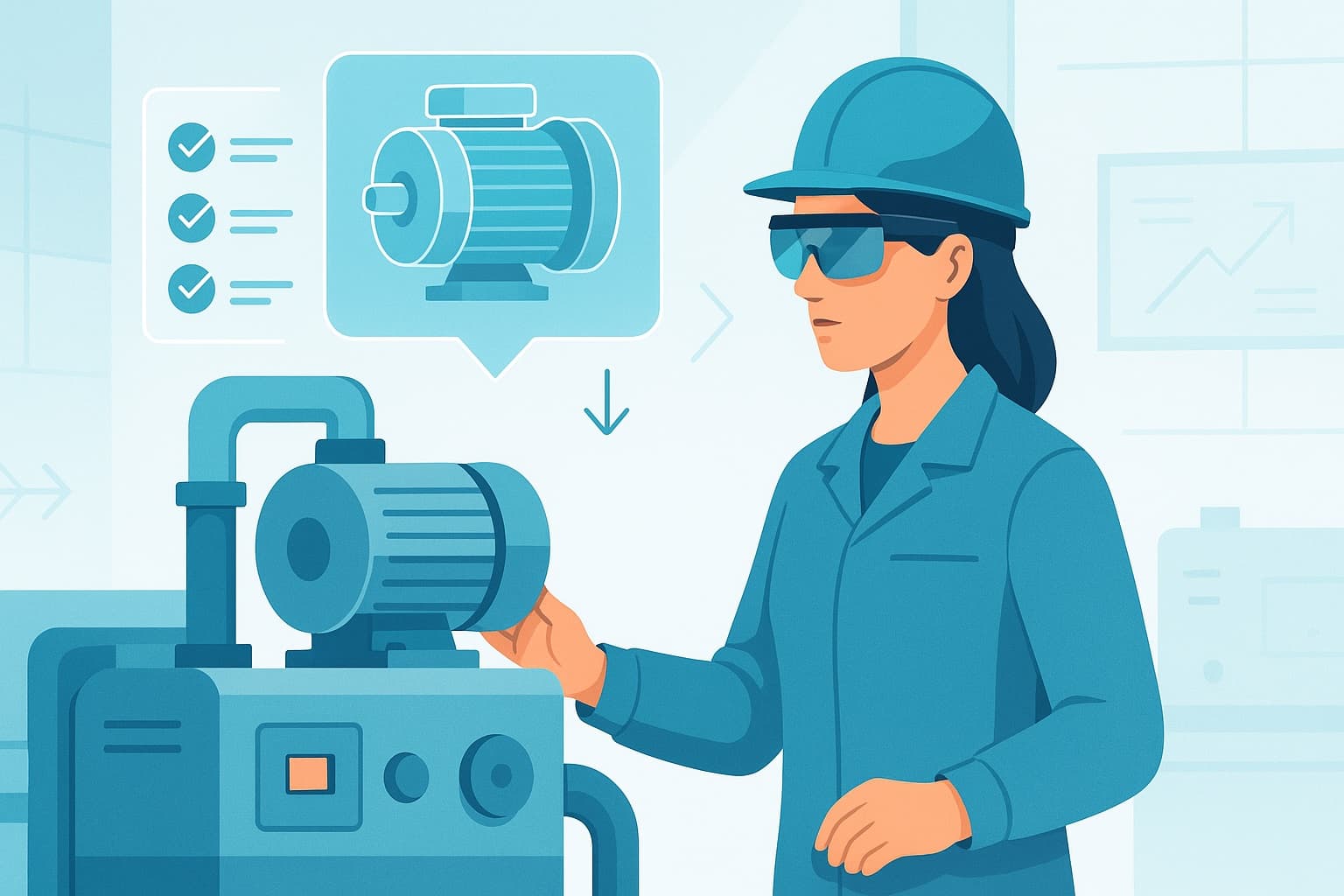
Augmented reality (AR) work instructions are becoming standard in industrial environments, but one question remains critical: how to keep AR content up to date when processes change frequently? For operations managers, HSE leads, and training specialists, outdated instructions can undermine safety, efficiency, and compliance. Keeping digital work instructions accurate and aligned with the latest procedures is now a frontline concern.
The challenge: process change and the risk of outdated AR content
Industrial processes rarely stand still. Whether due to continuous improvement initiatives, new compliance requirements, equipment upgrades, or lessons learned from incidents, procedures are always evolving. This pace of change is especially fast in:
- Chemical processing, where safety protocols update after every incident or audit.
- Manufacturing, where equipment retooling or new SKUs drive workflow changes.
- Utilities and energy, where regulations and maintenance methods shift with new assets.
When AR SOPs or digital work instructions fall out of sync with reality, the risks are tangible:
- Operators may follow obsolete steps, leading to safety incidents or quality escapes.
- Training content quickly becomes irrelevant, undermining onboarding and upskilling.
- Auditors flag compliance gaps, exposing the organisation to fines or shutdowns.
- Teams lose trust in digital instructions, reverting to paper or informal workarounds.
A 2023 report from the National Safety Council highlights that nearly 40% of industrial incidents involve incorrect or outdated procedures. For decision makers, the imperative is clear: AR content must keep pace with continuous process change.
Why traditional content management falls short
Most companies still rely on manual processes for updating work instructions—whether digital PDFs, intranet pages, or AR overlays. These methods are slow, error-prone, and often disconnected from the realities of the shop floor.
Common pitfalls of manual AR SOP updates
- Bottlenecked content ownership: Only a handful of specialists can edit AR content, creating update delays.
- Version control issues: Multiple versions circulate, increasing the risk of teams using outdated instructions.
- Slow feedback loops: Operators’ suggestions or process tweaks take weeks to reach content creators.
- Siloed systems: AR content is not integrated with change management, Document Control, or QMS platforms.
For operations and HSE leaders, these issues add up to increased risk, higher costs, and missed performance targets. Traditional content governance is not designed for the pace of modern industrial change.
What’s needed: agile, governed AR content management
A new approach is required—one that embeds AR content updates into the fabric of operations, governance, and continuous improvement. The goal: ensure that every operator, technician, or field engineer sees the right instruction, every time.
Key requirements for keeping AR content current
- Integrated change management: AR work instructions must be linked to formal change processes (MOC, CAPA, ECR).
- Role-based editing: Enable process owners and SMEs—not just IT or content teams—to update AR SOPs within clear governance.
- Instant publishing with audit trails: Updated content should be pushed to devices in real time, with full traceability.
- Operator feedback loops: Field teams must be able to flag errors or suggest improvements directly from the AR interface.
- Automated version control: Only the latest approved instruction is accessible, with previous versions archived for compliance.
This approach shifts AR content management from a static, IT-driven task to a dynamic, operational discipline.
How AI and AR–guided work instructions enable rapid, safe updates
Modern platforms combine AI, AR, and robust workflow tools to address the unique challenges of frequent process change. Here’s how:
AI-assisted content creation and updates
- Automated text and image suggestions: AI can propose updated instructions, diagrams, or hazard alerts based on the latest process data or incident reports.
- Natural language processing: SMEs can dictate changes in plain language; the system drafts AR overlays or step-by-step guides automatically.
- Smart content tagging: AI classifies updated content by asset, process, skill level, and compliance rule, ensuring targeted delivery.
AR content authoring for process owners
- Drag-and-drop editing: No coding required—process engineers and QA leads update AR SOPs directly, reducing bottlenecks.
- Template libraries: Standardized templates for common tasks (lockout/tagout, inspection, calibration) accelerate updates and ensure compliance.
- Real-time preview: Editors see exactly how updates will appear on AR devices, minimizing errors and rework.
Integrated review and approval workflows
- Automated routing: Updates trigger review by safety, quality, or engineering leads as required by governance.
- Digital signatures and audit trails: Every change is logged, timestamped, and linked to the responsible person for compliance.
- Instant publishing: Once approved, new instructions are live across all devices—no waiting for IT or manual deployment.
Embedded feedback and continuous improvement
- In-AR feedback: Operators flag unclear steps or hazards directly from their AR headset or tablet.
- Closed-loop resolution: Feedback is routed to the content owner for review and update, with status visible to the reporting user.
- Analytics and usage tracking: Data on which instructions are used (or skipped) informs further improvements.
Note: A 2022 Gartner report found that organisations adopting AI-assisted digital work instruction platforms reduced content update lead times by over 50%.
Use cases: keeping AR SOPs current in fast-changing environments
Manufacturing: responding to equipment changes
A global automotive supplier updates its assembly line processes monthly due to new product variants. With AI and AR–guided work instructions:
- Process engineers update digital SOPs immediately after retooling.
- Operators receive the latest AR instructions on their devices at shift start.
- Quality teams review and approve changes within hours, not weeks.
Chemicals: rapid compliance with new safety protocols
After an audit, a chemical plant needs to update lockout/tagout procedures across 40 assets. Using integrated AR content management:
- HSE managers edit AR SOPs using pre-approved templates.
- Updates are pushed instantly to all AR devices and tablets.
- Audit trails document every change for regulators.
Utilities: onboarding for new assets
A utility company brings a new substation online, requiring custom inspection steps. With AR content management:
- Field engineers create new AR overlays on-site.
- Supervisors review and approve remotely.
- Training teams update onboarding modules the same day.
These scenarios show that rapid, governed AR content updates are not only possible—they are now an operational advantage.
Addressing common objections: hardware, governance, and content quality
Decision makers often raise practical concerns about AR content management in dynamic settings. Here’s how leading platforms address them:
Hardware compatibility
- Most AR SOP platforms support a wide range of devices, including smart glasses, tablets, and smartphones.
- Content updates are cloud-delivered, minimizing the need for device-level management.
Change management and governance
- Role-based permissions ensure only authorized personnel can edit or approve AR content.
- Integration with existing change management (MOC, QMS) systems aligns digital work instructions with formal processes.
Content creation and quality
- AI-assisted tools reduce the burden on SMEs and ensure consistency.
- Embedded review workflows and audit trails maintain compliance and quality standards.
For more on integrating AR into your governance, see AR onboarding for new technicians and digital work instructions for compliance-critical industries.
What ActARion brings to AR content management
ActARion helps industrial organisations keep their AR content current, accurate, and compliant—even when processes change weekly or daily. Our solution combines:
- AI-driven content authoring, making updates fast and accessible to process owners.
- Integrated workflows, ensuring every change is reviewed, approved, and traceable.
- Direct operator feedback, closing the loop between the field and content owners.
- Broad device support, from AR headsets to tablets and mobile phones.
With ActARion, operations managers, HSE leads, and training professionals can:
- Digitize and update work instructions in real time.
- Minimize risk of outdated or unsafe procedures.
- Ensure compliance and audit readiness, even in fast-changing environments.
- Empower teams to contribute to continuous improvement.
For a deeper dive into our approach, see how ActARion supports digital SOP governance or our FAQ on AR content updates.
Explore this in your organisation
Keeping AR content up to date is critical for safety, quality, and productivity—especially where processes change quickly. If you’re ready to see how agile AR content management could work for your teams, schedule a discovery call with ActARion. There’s no commitment—just a practical look at your current SOP update challenges and how AI and AR–guided work instructions can help.
Learn more about ActARion’s use cases for rapid SOP updates or contact our team for an exploratory session. For further reading on industry best practices, see the National Safety Council workplace safety resources.
Meta description:
How to keep AR content up to date when processes change frequently. For operations and HSE managers: practical steps to ensure safety, compliance, and efficiency.
URL slug:
ar-content-up-to-date-process-change