
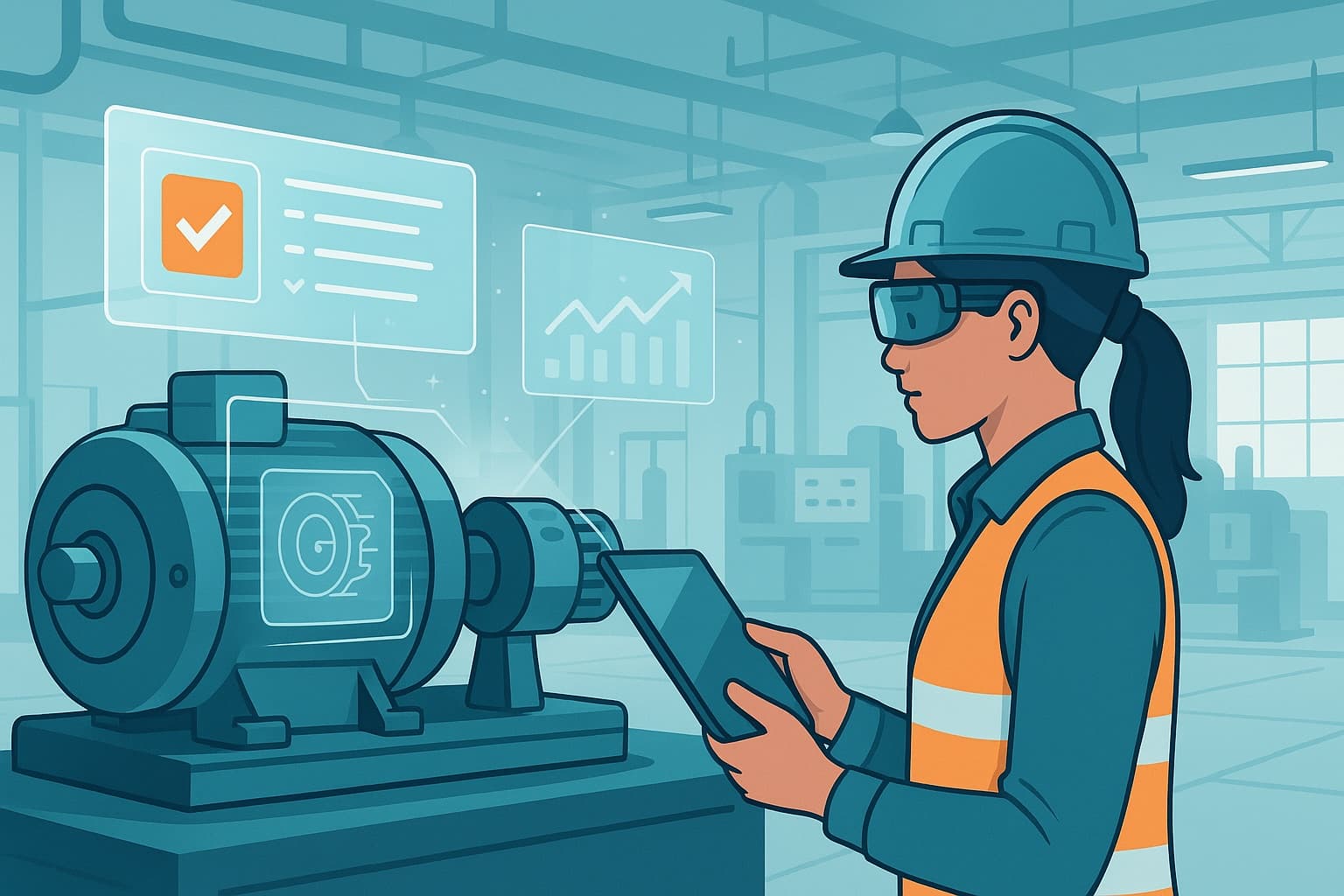
Setting up an internal AR content factory with your subject matter experts is one of the most effective ways to deliver high-quality, up-to-date digital work instructions at scale. For operations, HSE, and L&D leaders, this approach enables safer, faster, and more consistent work while retaining critical know-how inside your organization.
Why industrial companies need an AR content factory now
Industrial organizations face pressure to maintain productivity, quality, and safety standards as senior staff retire and new technologies emerge. Many teams still rely on paper-based SOPs or scattered digital documents. These approaches often fail to capture expert knowledge or adapt quickly to change.
Key drivers making AR content creation urgent:
- Aging workforce: As experienced technicians retire, capturing their expertise is business-critical.
- Complexity: Equipment, regulations, and processes are more complex than ever.
- Remote and distributed teams: Consistent training and guidance are harder to deliver.
- Safety and compliance: Incomplete or outdated instructions increase risk and regulatory exposure.
- Continuous improvement: Feedback loops are slow when documentation is static.
Traditional training and documentation models are too slow and inflexible for today’s pace. AR and AI–guided work instructions offer a way to bring expert knowledge directly to the point of need, but only if you can create and update content efficiently.
The challenge: capturing and scaling expert knowledge
Building a steady pipeline of digital work instructions using AR platforms requires two things:
- Access to real subject matter experts (SMEs) who know your processes inside out.
- A repeatable, manageable way to capture, validate, and update their knowledge.
Many companies struggle with:
- Bottlenecks: Only a few people can create AR content; IT or external vendors are overloaded.
- Quality gaps: SMEs are not trained in instructional design or AR tools.
- Governance: No clear process for reviewing, updating, and retiring work instructions.
- Change management: Teams are unsure how to adopt new methods alongside existing SOPs.
To address these challenges, leading organizations are setting up internal “AR content factories”—dedicated, cross-functional teams and processes to turn SME know-how into usable, scalable AR SOPs and digital work instructions.
What is an internal AR content factory?
An AR content factory is an internal capability that enables your organization to:
- Rapidly capture task knowledge from SMEs.
- Convert it into structured, AR–ready digital work instructions.
- Validate, deploy, and update content as processes evolve.
- Ensure governance, quality, and compliance at every step.
The content factory model borrows from manufacturing: standardized workflows, clear roles, and a focus on repeatable quality. The difference is the “product” is actionable knowledge, not a physical part.
Key elements:
- SME engagement: Operators, technicians, engineers, and process owners contribute knowledge.
- Content producers: Team members trained to use AR authoring tools and instructional design principles.
- Review and governance: QA, HSE, and operations leaders review and approve content.
- Feedback loops: Continuous updates based on user feedback and process changes.
This approach scales AR SOPs and AI–guided instructions far beyond what a central documentation or training team could produce alone.
How an AR content factory works in practice
Setting up an AR content factory is a change process. It involves new roles, workflows, and technology. Here is a practical breakdown of the major steps:
1. Define scope and objectives
Start by identifying where AR and digital work instructions will have the highest impact. Common areas include:
- Safety-critical maintenance tasks
- Equipment changeovers and setups
- Quality inspections and audits
- Onboarding and upskilling for new team members
Set clear goals, such as reducing errors, improving compliance, or accelerating onboarding.
2. Build your cross-functional team
A successful AR content factory brings together:
- Subject matter experts: Field engineers, operators, maintenance leads, QA and HSE specialists.
- Content producers: L&D or technical writers trained in AR authoring.
- Reviewers: Supervisors, safety officers, and process owners for governance.
- IT and platform support: To ensure tool access and integration.
Keep the team lean but representative. For most organizations, a core group of 5–10 is enough to start.
3. Select the right AR authoring tools
Choose a platform that:
- Allows non-technical users to capture and structure procedures visually (e.g., via guided video, step-by-step overlays, voice annotations).
- Supports AI-driven suggestions for content structure and translation.
- Integrates with your learning or asset management systems.
- Enables easy content updates and version control.
The right tool should empower SMEs to contribute directly, not just content specialists.
4. Standardize your content creation process
Develop a clear, repeatable workflow:
- Capture: SMEs record or document task steps using mobile devices or AR glasses.
- Draft: Content producers structure the instructions, add visuals, and ensure clarity.
- Review: QA, HSE, or operations leads review for accuracy, safety, and compliance.
- Publish: Approved content is released to teams via AR devices or mobile apps.
- Feedback: End users flag issues or suggest improvements, triggering updates.
Create templates for different task types to ensure consistency.
5. Train your SMEs and content producers
Most SMEs are not instructional designers. Provide short, focused training on:
- Using AR authoring tools
- Structuring clear, actionable instructions
- Capturing safety and compliance requirements
- Reviewing and updating content
Pair less experienced contributors with mentors to accelerate learning.
6. Establish governance and quality control
Define who owns each type of content and how updates are managed. Key governance measures:
- Version control for all AR SOPs and digital work instructions
- Scheduled reviews (e.g., every 6–12 months)
- Clear criteria for retiring or archiving outdated content
- Audit trails for compliance
Assign responsibility for monitoring usage data and feedback.
7. Pilot, measure, and scale
Start with a focused pilot in one department or process. Measure:
- Time to create and deploy new AR SOPs
- Reduction in errors, incidents, or rework
- User adoption and satisfaction
- Impact on onboarding speed
Use results to refine your process and build support for wider rollout.
Use cases: where AR content factories deliver results
Industrial organizations have seen measurable benefits from internal AR content factories in areas such as:
- Maintenance and repair: Technicians follow AR–guided steps, reducing training time by up to 40% and cutting errors (Siemens, 2022).
- Safety procedures: AR SOPs ensure consistent lockout/tagout and permit-to-work compliance, lowering incident rates.
- Quality inspections: Operators conduct step-by-step visual checks, with real-time data capture and reporting.
- Onboarding: New team members ramp up faster, using digital instructions created by experienced colleagues.
- Process change: Rapid updates to AR content help teams adapt to new equipment or regulatory changes.
Note: For further reading on AR SOPs in maintenance, see digital work instructions for maintenance teams.
Overcoming common challenges
Implementing an AR content factory is not without hurdles. Key risks and mitigation strategies:
- Content overload: Start with high-impact tasks; avoid trying to digitize everything at once.
- Change resistance: Involve SMEs early and show clear benefits (safer work, less paperwork, faster onboarding).
- Quality control: Use checklists and peer reviews to ensure instructions meet safety and compliance needs.
- Hardware and access: Ensure AR devices or mobile tools are available and easy to use in the field.
- Ongoing support: Dedicate time for content updates and recognize contributors’ efforts.
Change management is essential. Regular communication, clear roles, and visible leadership support are critical to success.
What ActARion brings to your AR content factory
ActARion has helped industrial organizations build internal AR content factories that deliver measurable improvements in safety, productivity, and knowledge retention.
With ActARion, you get:
- Proven methodology: Step-by-step frameworks for setting up teams, workflows, and governance.
- User-friendly tools: Platforms designed for SME-driven content creation and rapid updates.
- Change management support: Training, coaching, and best practices to accelerate adoption.
- Integration expertise: Seamless connection to your existing systems and compliance processes.
- Ongoing partnership: Regular reviews, metrics, and optimization to ensure sustained value.
Our approach emphasizes safety, compliance, and operational excellence—delivering AI and AR–guided work instructions your teams can trust.
Explore what an AR content factory could look like in your organization
Building an internal AR content factory with your subject matter experts is a concrete, proven way to drive safer, faster, and higher quality work. If you want to see how this could work for your maintenance, HSE, or operations teams, schedule an exploratory call with ActARion. There’s no obligation—just a chance to see practical examples, discuss your challenges, and identify quick wins.
Learn more about AR SOP creation and management or see how digital work instructions support onboarding. For a broader industry perspective, see Gartner’s overview of AR in industrial operations.
Meta description:
How to set up an internal AR content factory with subject matter experts: A guide for operations, HSE, and L&D leaders to drive safer, faster, higher quality work.
URL slug:
ar-content-factory-with-smes
---

## Go deeper

This article is part of our knowledge base on AI and AR–guided work instructions. For a comprehensive overview, read our whitepaper:

**[AI and AR–guided work instructions: a practical guide for operations teams](/en/whitepapers/ai-and-ar-guided-work-instructions)** — Covers the full cycle of capturing, building, deploying, and improving AR work instructions.